How to Buy Miami Real Estate When Interest Rates Are High (2026)
By Rangely Adames • April 2026 • 11 min read
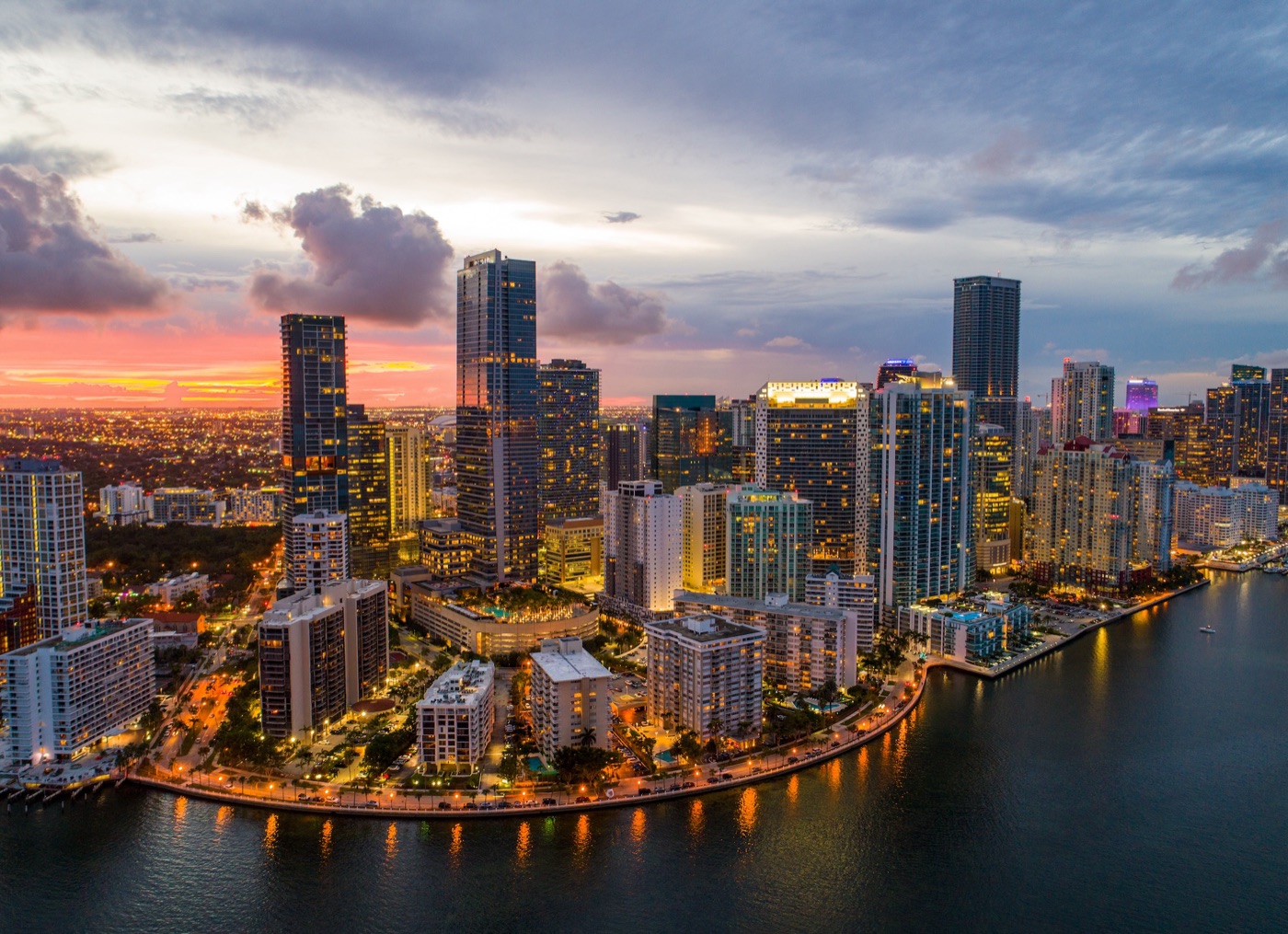
I get some version of this question almost every week: should I wait for rates to come down before buying in Miami? It is a fair question, and I understand why people are asking it. When mortgage rates sit in the 6.5 to 7.5 percent range, the monthly payment on a $800,000 Brickell condo looks very different than it did when rates were hovering near 3 percent. But after working with buyers and investors across Miami for years, I can tell you that waiting for a perfect rate environment has cost more people money than it has saved them.
Miami is not a market that pauses while you wait. Inventory in desirable neighborhoods like Coral Gables, Coconut Grove, and Key Biscayne remains tight. Sellers who priced their properties well are still getting strong offers. And the buyers who sat on the sidelines through 2023 and 2024 watched prices in waterfront communities and luxury condo buildings continue to climb. The strategy is not to wait. The strategy is to buy smart.
In this post I want to walk you through exactly how I help clients navigate a high-rate environment in Miami. From rate buydowns and adjustable-rate mortgages to the specific neighborhoods where cash flow still makes sense, there are real tools available to buyers today. If you want to talk through your specific situation, call me at (954) 833-0020. Hablamos Espanol, and I work with buyers coming from Latin America, New York, California, and right here in South Florida.
Ready to Buy Smart in Miami This Year?
Whether you are a first-time buyer, a seasoned investor, or relocating from abroad, I can help you navigate Miami's market with a strategy that works at any rate environment. Hablamos Espanol. Call (954) 833-0020 for a free consultation.
Call (954) 833-0020Sunland Real Estate LLCWhy Miami Prices Have Not Dropped Much Despite Higher Rates
A lot of buyers arrive expecting that higher borrowing costs will translate directly into lower home prices. In many U.S. markets, that has been partially true. In Miami, the relationship is more complicated.
Miami has seen a significant wave of cash buyers over the past several years. In many luxury buildings along Brickell Avenue, South Beach, Bal Harbour, and Sunny Isles Beach, cash transactions represent 40 to 60 percent of closings depending on the building and price point. When nearly half of all buyers are not using a mortgage at all, rising rates have a limited effect on demand.
The second factor is continued in-migration. People are still relocating from high-tax states like New York, New Jersey, and California, and from Latin American countries where political and economic instability makes Miami real estate feel like a safe and stable store of value. That demand does not disappear because rates went up. It adjusts, but it does not vanish.
The third factor is inventory. Miami has a structural shortage of single-family homes in premium neighborhoods. In Coconut Grove, Pinecrest, and Coral Gables, there are simply not enough homes for sale to meet the demand from qualified buyers. When supply is constrained, prices hold. I have watched clients lose well-priced homes in Coconut Grove because they kept waiting for a better rate and the inventory moved without them.
Explore on rangelyadames.com
The Real Cost of Waiting: A Miami-Specific Look
Let me give you a concrete example. In early 2023, a well-located two-bedroom condo in Edgewater was priced around $550,000. Some buyers held off, expecting prices to soften as rates climbed. By late 2024, comparable units in the same buildings were listing between $620,000 and $650,000. The buyers who waited saved nothing on the rate and paid more for the asset.
The math gets even more pronounced in the luxury segment. A waterfront home in Key Biscayne that was $3.2 million in 2022 did not drop to $2.8 million when rates rose. It sold for $3.5 million the following year because the pool of buyers for that property does not shrink much when borrowing costs increase.
There is also the cost of renting while you wait. Miami rents have remained elevated. A two-bedroom apartment in Brickell or Midtown Miami runs $3,200 to $4,500 per month for something decent. Every month you rent is a month of equity-building you are handing to someone else's investment instead of your own.
This is not me telling you to rush into a purchase that does not work for your finances. It is me telling you that the strategy of waiting for rates to fall to 2021 levels is not a strategy. It is a hope. A real strategy looks at what you can actually afford today, uses available financing tools, and selects the right asset for your goals.
Financing Tools That Actually Work in This Market
I am not a mortgage lender, and you should absolutely work with a qualified lender who understands the Miami condo market specifically. But as your agent, I help you understand the financing landscape so you know what questions to ask.
The first tool worth understanding is a temporary rate buydown. A seller or builder will pay a lump sum at closing to reduce your interest rate for the first one, two, or three years of the loan. A 2-1 buydown, for example, lowers your rate by 2 percent in year one and 1 percent in year two before settling at your permanent rate in year three. On a $600,000 mortgage at 7 percent, that can mean savings of $700 to $900 per month in your first year. In a market where sellers are occasionally willing to negotiate, especially on properties that have sat for more than 60 days, a buydown can be a more valuable concession than a straight price reduction.
Adjustable-rate mortgages, or ARMs, are worth a serious look for certain buyers. A 7/1 ARM fixes your rate for seven years and then adjusts annually after that. If you are buying a condo in Aventura or Sunny Isles as a part-time residence and plan to reassess your situation in five to seven years, an ARM can save you meaningfully over that fixed period. The risk is what happens at adjustment, and your lender needs to walk you through worst-case scenarios honestly.
For Latin American buyers purchasing as foreign nationals, the lending landscape is more limited but not impossible. Several Miami-based lenders offer foreign national loan programs with 30 to 40 percent down payments and rates that are higher than conventional loans but still competitive. I work with clients from Colombia, Venezuela, Argentina, and Brazil regularly on these types of transactions, and having the right lender on the team from the start makes a major difference.
Finally, for investors buying income-producing properties, debt service coverage ratio loans, or DSCR loans, qualify you based on the rental income the property generates rather than your personal income. This can open doors for buyers whose income structure does not fit traditional underwriting, which is common among entrepreneurs, business owners, and international clients.
Neighborhoods Where the Numbers Still Work for Investors
Not every Miami neighborhood pencils out equally well for investors in a higher-rate environment. The math depends on the purchase price, HOA fees, rental income potential, and short-term rental regulations.
Edgewater and Wynwood remain interesting for investors who can use the property as a long-term rental. A one-bedroom condo in Edgewater can be purchased in the $450,000 to $550,000 range and rented for $2,400 to $2,900 per month. After HOA fees that typically run $800 to $1,200 per month in newer buildings, plus taxes and insurance, the cash-on-cash return is thin at current rates, but the appreciation story in those neighborhoods over a ten-year hold is compelling.
Little Havana and Allapattah offer lower entry prices and are attracting increasing interest from younger buyers and renters. Single-family homes and small multifamily properties in these neighborhoods can still be found in the $400,000 to $650,000 range, and rental demand from working professionals is strong. These are not glamorous investments, but they produce better cash flow than most luxury condos.
For buyers focused on luxury short-term rentals, Miami Beach remains the target, but the short-term rental regulations are complex. The City of Miami Beach restricts short-term rentals to specific zoning districts, and buildings must be individually licensed. I always advise clients to verify the exact rental rules for a specific building before making an offer, because assumptions here are expensive. Call me at (954) 833-0020 before you start touring buildings in Miami Beach if rental income is part of your plan.
Aventura is a market I recommend often for buyers who want a full-service lifestyle, proximity to both Miami and Fort Lauderdale, and a condo that can be rented out when not in use. HOA fees in Aventura buildings run $1,000 to $2,500 per month depending on the building and unit size, which is a real line item to factor into your analysis, but the rental market is steady and tenant turnover is generally lower than South Beach.
How to Negotiate in a Market With Fewer Buyers
A higher-rate environment does reduce the number of financed buyers competing for properties. That is actually an opportunity if you approach it correctly.
Properties that have been sitting on the market for 45 days or more are often worth revisiting. Sellers who listed at aspirational prices six weeks ago are sometimes more realistic today. I regularly review the days-on-market data across Brickell, Midtown Miami, and Coral Gables to identify listings where a well-structured offer has a real chance of being accepted below asking price.
When I negotiate for buyers in this market, I focus on a few specific levers beyond just price. Closing timeline flexibility is valuable to many sellers, and offering a fast 21-day close with strong financing or cash can be worth more than a higher price with uncertain financing. A larger earnest money deposit signals commitment and can sway a seller who has already dealt with one deal falling through.
Seller concessions toward closing costs or a rate buydown are often more palatable to sellers than a straight price cut, because it does not lower the recorded sale price on their home. I have negotiated concessions of $15,000 to $30,000 on properties in the $700,000 to $1.2 million range in the past year by framing the ask around financing assistance rather than a price reduction.
The key is coming in with a clean offer. In a market where there are fewer buyers, sellers are also more nervous about deals falling apart. An offer with a clear pre-approval, minimal contingencies where appropriate, and a realistic inspection period from a buyer who is clearly prepared will beat a higher offer from a buyer who seems uncertain almost every time.
What to Look for in a Miami Condo When Rates Are High
When financing costs are elevated, the fundamentals of the individual property matter more than ever. Here is what I tell every condo buyer I work with right now.
First, review the building's reserve fund status. Since the Surfside collapse and the subsequent Senate Bill 4-D, condo buildings in Florida are under far more scrutiny regarding their structural integrity and financial health. Buildings with underfunded reserves are facing special assessments that can run $20,000 to $100,000 or more per unit. That is a real risk on top of your mortgage payment. I always request the most recent reserve study and the condo association's financials before advising a client to proceed.
Second, understand the rental restrictions. Some buildings in Coral Gables and Key Biscayne have minimum lease periods of six months or one year. If your plan involves any flexibility around renting the unit, you need to know the rules before you close.
Third, look at the building's pending litigation. A condo association involved in active litigation may be ineligible for certain types of financing, which also affects your resale pool down the road. Your title company and lender will flag this, but it is worth asking about upfront.
Fourth, pay attention to the assessment history. A building that has levied multiple special assessments in the past five years is telling you something about how it is managed and the condition of its infrastructure.
In summary, when evaluating a Miami condo in a high-rate environment, these are the four documents I always request before advising a buyer to move forward:
- Most recent reserve fund study and percentage funded
- Last 12 months of condo association meeting minutes
- Current and pending special assessments
- Rental restriction policy from the association
The Case for New Construction in a High-Rate Market
One segment of the Miami market that actually benefits from higher rates is new construction pre-sales. Developers are motivated to move units and have more flexibility to offer incentives that resale sellers typically cannot match.
Several active development projects in Brickell, Edgewater, and the Wynwood area are currently offering rate buydowns, extended deposit structures, and upgraded finishes as part of their sales packages. A 2-1 buydown offered by a developer on a new Brickell tower unit can save a buyer $15,000 to $25,000 in mortgage payments over the first two years, which is real money.
The other advantage of new construction pre-construction purchases is the deposit structure. Most Miami developers require 10 to 20 percent down at contract, with the remainder due at closing, which is typically two to four years out. If rates decline in that window, you benefit at closing with a better rate. If rates stay flat or rise, you have already locked in the purchase price and the developer incentives from today.
The risks of pre-construction are real and worth understanding. Delivery delays are common in Miami. Construction costs have remained elevated, and some projects have seen scope reductions or timeline extensions of one to two years. I have helped clients navigate these situations, and the key is understanding the developer's track record, the strength of the contract terms, and the financial backing behind the project before committing.
Should You Buy Now or Wait? My Honest Answer
I am going to give you the honest answer I give every client who asks me this directly: it depends on your time horizon, your financial position, and your reason for buying. But for most of the buyers I work with, the answer is to buy now with the right property and the right financing structure.
If you are buying a primary residence in a neighborhood like Coral Gables, Coconut Grove, or Key Biscayne and you plan to stay for five or more years, the rate you pay today matters less than the equity you build and the appreciation you capture. Miami neighborhoods with strong school districts, walkability, and lifestyle amenities have historically appreciated at 5 to 8 percent annually over long holding periods. That outpaces the extra borrowing cost at current rates for most buyers.
If you are an investor with a short time horizon of one to two years, the math is harder. Thin cash-on-cash returns and elevated financing costs make quick flips difficult unless you are buying significantly below market value. I do not see a lot of those opportunities in Miami right now outside of distressed properties or estate sales.
If you are a Latin American buyer looking to place capital in a stable U.S. market, Miami real estate continues to serve that purpose extremely well. The legal framework, property rights, and liquidity of the Miami market are strong, and the dollar-denominated asset provides a hedge that many of my clients value independent of whether rates are at 4 percent or 7 percent.
Whatever your situation, I can help you run the numbers and find the right path. I have been doing this in Miami for years, I know this market in detail, and I work in both English and Spanish. Call me directly at (954) 833-0020 and let's have a real conversation about what makes sense for you.
Let's Build Your Miami Real Estate Strategy
Stop waiting for perfect conditions and start building a plan that works today. Call Rangely Adames at (954) 833-0020 and let's find the right property, the right financing, and the right timing for your goals.
Related Articles
September 28, 2026 · 10 min read
Argentine Buyers Guide to Miami Real Estate: Process, Financing Themes, and Neighborhood Fit (2026)
Buying Miami real estate from Argentina is workable when you separate what your agent coordinates from what your attorney, CPA, and lender decide. This support guide walks through the process, financing themes, remote closing, and neighborhood fit, then points you to the Argentina foreign-buyer hub for next steps.
Read article →February 2026 · 9 min read
Aventura Real Estate Guide: Condos, Schools & Lifestyle (2026)
Luxury high-rises, top-rated schools, and the Aventura Mall — why families and investors love this North Miami suburb.
Read article →February 2026 · 9 min read
Airbnb Investment Properties in Miami: Rules, ROI & Best Areas
Short-term rental regulations, income projections, and the best Miami neighborhoods for Airbnb investing.
Read article →