Miami Waterfront Property Tax Guide (2026)
By Rangely Adames • August 2026 • 11 min read
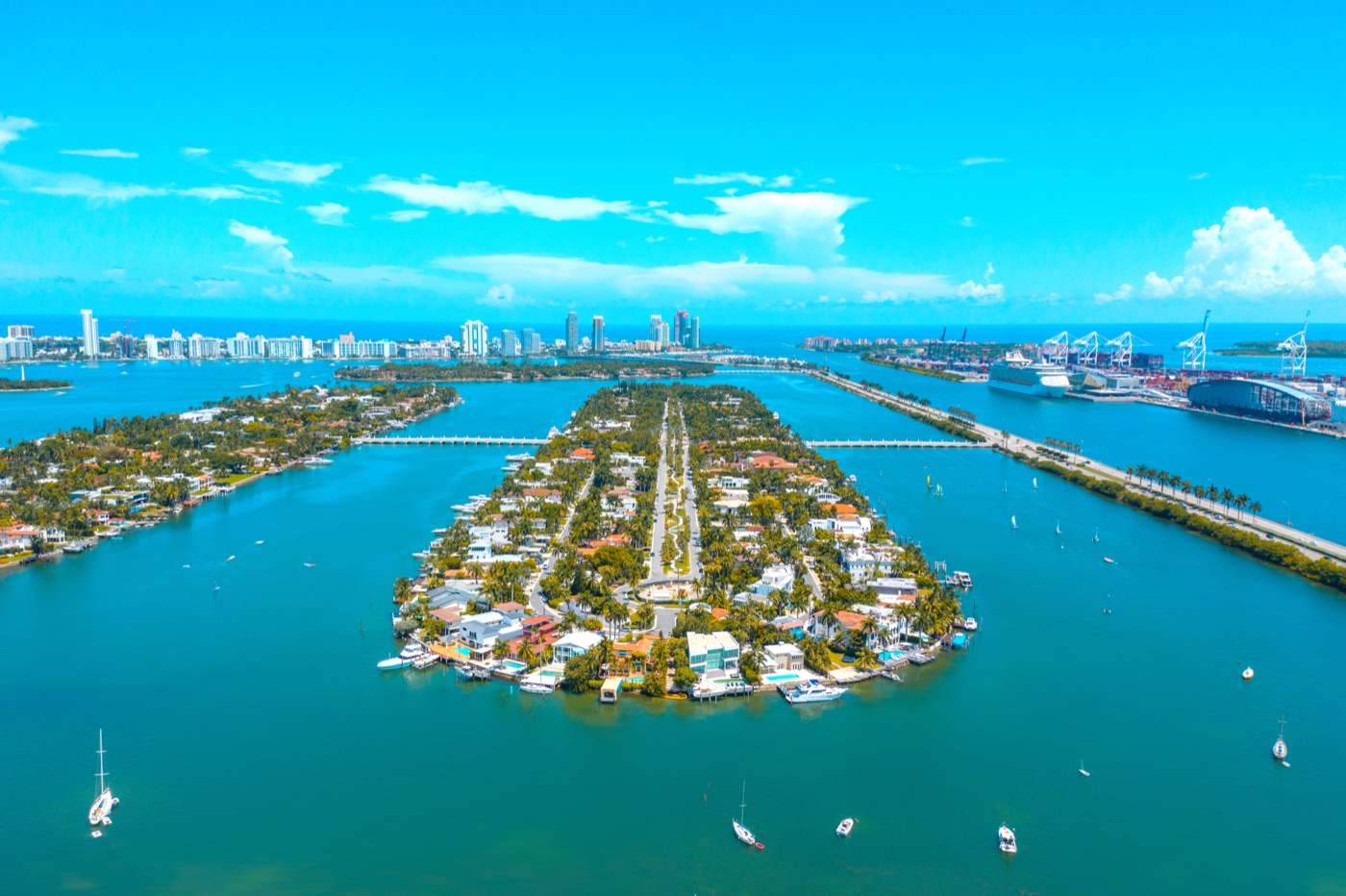
Waterfront property in Miami is some of the most coveted real estate in the country, and for good reason. Whether you are looking at a bayfront estate in Coconut Grove, a canal-front home in Miami Shores, or a high-floor condo in Sunny Isles Beach with direct ocean views, the appeal is undeniable. But one thing I consistently see buyers underestimate is the full cost of owning waterfront property, especially property taxes.
I have worked with buyers and sellers across Miami-Dade County for years, and the tax conversation comes up in almost every waterfront transaction. The numbers can be surprising if you are not prepared. A home that feels affordable at its purchase price can carry an annual tax bill that changes the entire financial picture. Understanding how Miami waterfront property taxes work before you close is not optional, it is essential.
In this guide, I am going to walk you through how Miami-Dade County assesses waterfront properties, what exemptions are available, how taxes change after you buy, and what you should budget for in different neighborhoods. I also work with many Latin American clients who are purchasing from abroad, so I will touch on what foreign buyers need to know specifically. Hablamos Espanol, and my team is happy to walk through these numbers in detail. Call us at (954) 833-0020 anytime.
Questions About Waterfront Property Taxes?
My team can pull the assessed value and estimate your real tax bill on any Miami waterfront property before you make an offer. Hablamos Espanol. Call (954) 833-0020.
Call (954) 833-0020How Miami-Dade County Assesses Waterfront Property
Miami-Dade County assesses all real property through the Miami-Dade Property Appraiser's office. The assessed value is meant to reflect market value, though in practice there are important distinctions between assessed value, taxable value, and market value that every waterfront buyer should understand.
Waterfront properties are assessed based on several factors: the size and condition of the structure, lot size, frontage along the water, navigability of the waterway, and comparable sales in the area. A home with 100 feet of Biscayne Bay frontage will be assessed very differently from a home on a narrow interior canal in Hialeah, even if the square footage of the house is identical.
The millage rate in Miami-Dade County for 2025 was approximately 19 to 21 mills depending on your municipality, meaning roughly 1.9 to 2.1 percent of taxable value per year. For a waterfront home assessed at $3 million with no exemptions applied, that translates to a tax bill somewhere between $57,000 and $63,000 annually. That number gets many buyers' attention fast.
It is also important to know that Miami-Dade operates on a January 1 assessment date. Whatever the condition and ownership of the property on January 1 of a given year, that is what drives the assessment for taxes due in November of that same year. So if you close in March, your first full year of taxes under your ownership will not hit until the following November cycle.
Explore on rangelyadames.com
The Save Our Homes Cap and What Happens When You Buy
Florida's Save Our Homes amendment is one of the most important pieces of property tax law in the state, and it is critical to understand how it affects waterfront transactions specifically.
Under Save Our Homes, homestead properties see their assessed value capped at a 3 percent annual increase once the homestead exemption is established. Over time, in a rising market like Miami, this means longtime owners can have assessed values dramatically lower than current market value. I have seen waterfront homeowners in Coral Gables and Coconut Grove paying taxes on assessed values 40 to 50 percent below what the home would sell for today.
Here is the catch for buyers: when a waterfront property changes hands, the Save Our Homes cap resets. The county reassesses the property at or near market value in the year following the sale. This is called the millage reset, and it can cause a sharp jump in the tax bill compared to what the previous owner was paying.
As a practical example, imagine a seller on Key Biscayne who bought their waterfront home twenty years ago. They might be paying taxes on an assessed value of $1.8 million even though the home just sold for $5.5 million. When you buy it, the county will reassess closer to that $5.5 million figure. Your new annual tax bill at a 2 percent effective rate would be around $110,000, versus the $36,000 the seller was paying. That is not a surprise you want after closing.
I always advise my buyers to request the current assessed value from the Property Appraiser's office and to estimate their post-purchase taxes independently, not simply rely on the tax amount shown on the listing or in the MLS.
Homestead Exemption on Waterfront Homes
If you are purchasing a waterfront property as your primary residence, filing for the Florida Homestead Exemption is one of the smartest financial moves you can make. The standard homestead exemption removes $50,000 from your assessed value for county and school taxes, and additional exemptions exist for widows, seniors, veterans, and people with disabilities.
For a waterfront home assessed at $4 million, the $50,000 exemption is not enormous in the grand scheme of things, but it also triggers the Save Our Homes cap going forward. That cap, limiting future annual increases to 3 percent, is the real long-term benefit. In a market where waterfront values have been rising 8 to 12 percent per year in some neighborhoods, locking in that cap is worth thousands of dollars annually over time.
To qualify for homestead, you must be a Florida resident, make the property your permanent address, and file the application with the Property Appraiser by March 1 of the year you want the exemption to take effect. If you close on your waterfront home in October of 2025, you need to file by March 1, 2026 to have the exemption apply to your 2026 tax bill.
Foreign nationals and non-resident buyers do not qualify for homestead. This is an important distinction for my Latin American clients purchasing in Bal Harbour, Fisher Island, or Sunny Isles Beach as vacation homes or investment properties. Without homestead, there is no Save Our Homes cap, meaning the county can reassess your property upward without limit year over year.
Waterfront Tax Realities by Neighborhood
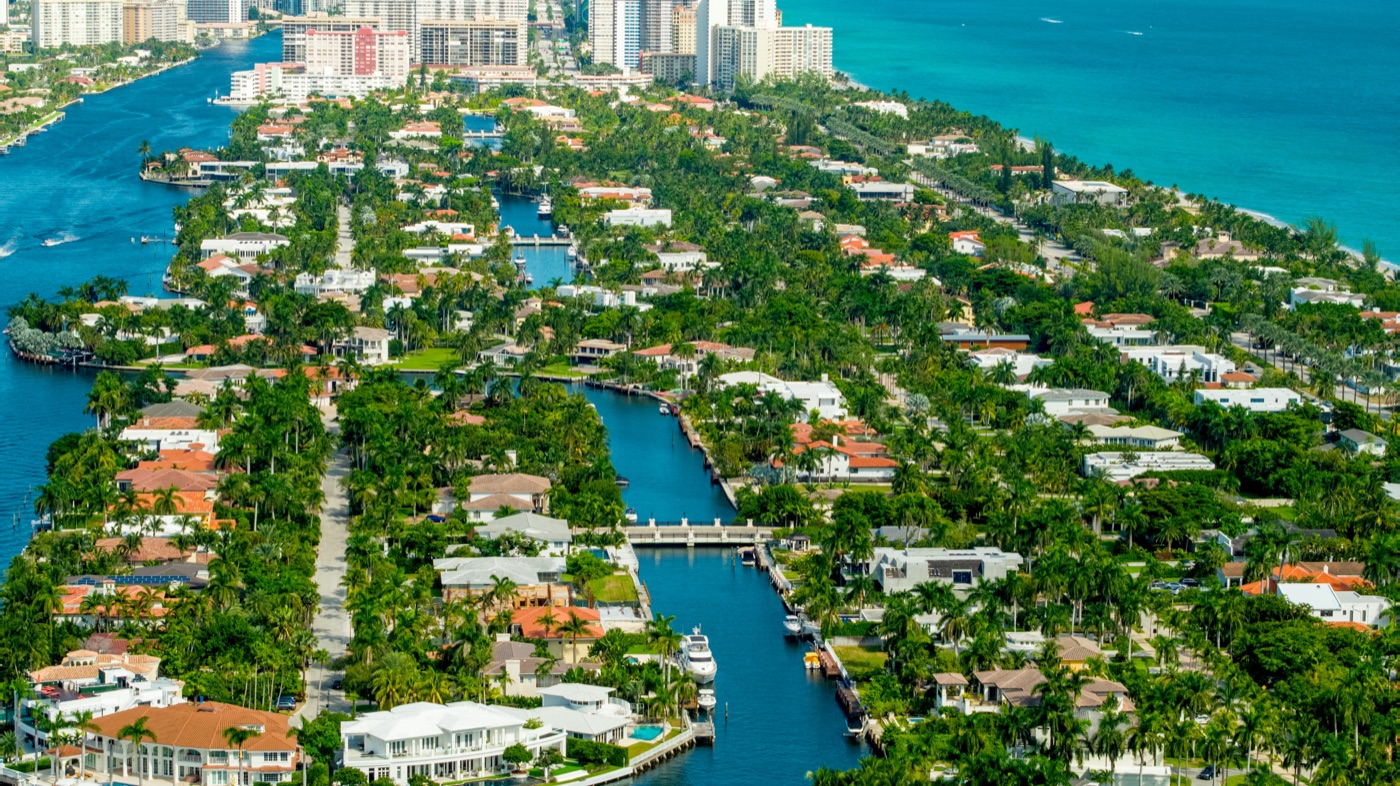
Tax burdens vary meaningfully across Miami waterfront markets, and it helps to look at specific neighborhoods so you understand the range you are working with.
In Bal Harbour and Sunny Isles Beach, oceanfront condos in the $2 million to $6 million range typically carry annual tax bills between $40,000 and $120,000 depending on assessed value and exemptions. Buildings like Porsche Design Tower, Regalia, and Acqualina have seen assessed values climb sharply in recent years as comparable sales have pushed higher.
On Miami Beach, specifically in the MiMo district, South of Fifth, and Mid-Beach, single-family waterfront homes on the bay side range from $3 million to well over $20 million. Tax bills on those properties often run $60,000 to $400,000 per year for non-homesteaded owners. On Star Island and Hibiscus Island, some of the estate-level properties carry tax bills exceeding $500,000 annually.
In Coconut Grove and Coral Gables, bayfront single-family homes in the $4 million to $15 million range typically carry effective tax rates closer to 1.8 to 2 percent of assessed value after homestead, which brings annual bills into the $70,000 to $270,000 range for most properties. These neighborhoods attract buyers who intend to make Miami their primary home, so homestead is more commonly claimed.
Key Biscayne is a smaller market with fewer waterfront listings available at any given time. Waterfront homes here sell from $5 million to over $30 million, and tax bills reflect that. Even with homestead, a $10 million home might carry an annual tax obligation of $180,000 to $200,000.
For canal-front properties in areas like Miami Shores, Bay Harbor Islands, and North Miami Beach, prices are lower but the tax math is proportional. A canal home purchased at $1.5 million might generate a first-year tax bill around $28,000 to $30,000 before any exemptions are applied.
What Foreign Buyers Need to Know About Waterfront Taxes
A significant portion of Miami waterfront buyers are international, and the tax picture for foreign buyers has a few additional layers worth understanding.
First, as I mentioned, foreign nationals who do not establish Florida residency cannot claim homestead exemption. This means there is no Save Our Homes cap protecting them from annual reassessments. In a market where waterfront values are appreciating, this creates real exposure to rising tax bills year after year.
Second, foreign buyers should be aware of FIRPTA (the Foreign Investment in Real Property Tax Act) when they eventually sell. While this is an income tax issue rather than a property tax issue, it affects net proceeds and should be factored into the overall financial plan for waterfront ownership.
Third, foreign buyers who hold Miami waterfront property through a corporation or LLC should consult with both a U.S. tax attorney and a qualified real estate agent before structuring the purchase. The entity structure affects not only how property taxes are assessed but also how the property is treated for estate planning purposes.
My team works with Latin American buyers from Colombia, Venezuela, Argentina, Brazil, Mexico, and across the Caribbean. We are very familiar with the specific questions that come up for international clients. Hablamos Espanol, and you can reach us directly at (954) 833-0020 to discuss your specific situation before making an offer.
Additional Assessments and Costs Beyond the Base Tax Bill
The base property tax is not always the end of the financial picture for waterfront owners. There are several additional line items that appear on Miami-Dade tax bills and on closing disclosures that buyers should understand.
Special assessments are one example. Miami Beach in particular has levied special assessments for sea level rise adaptation, stormwater infrastructure improvements, and seawall repair programs. These can add thousands of dollars per year to an already substantial tax bill. When I am working with buyers on Miami Beach waterfront properties, I always pull the full tax certificate to see what special assessments are currently in effect.
Municipal service taxes and fire assessments also appear on Miami-Dade tax bills. Depending on the municipality, these can add $500 to several thousand dollars per year. Incorporated cities like Coral Gables and Miami Beach have their own millage rates layered on top of county rates, which is why properties in those cities tend to carry higher effective tax rates than unincorporated county areas.
For waterfront condo buyers, there is also the matter of the building's own special assessment history. A building that has deferred seawall repairs or dock maintenance can levy a special assessment on unit owners that runs tens of thousands of dollars per unit. This is separate from property taxes entirely but equally important to review during due diligence.
Here are the key line items to review on any Miami waterfront property tax bill or estimated closing statement:
Portability is another concept worth raising here. If you currently own a Florida homestead property and are moving to a new waterfront home, you may be able to port your accumulated Save Our Homes benefit to the new property, up to $500,000 in saved assessed value. This is a significant financial tool for buyers upgrading within the Florida market.
Here are the key line items to review on any Miami waterfront property tax bill or estimated closing statement:
- County ad valorem tax based on assessed value and county millage rate
- Municipal ad valorem tax if the property is in an incorporated city like Miami Beach or Coral Gables
- School board millage, which applies to all properties regardless of homestead status
- Special assessments for infrastructure, stormwater, or sea level rise programs
- Fire and emergency services assessments
- Solid waste and sanitation fees
- Any outstanding liens or deferred maintenance assessments from the condo or HOA
How to Budget for Waterfront Property Taxes as a New Buyer
One of the most common mistakes I see from buyers relocating from states like New York, California, or New Jersey is assuming the tax bill listed in the MLS represents what they will pay. In many cases it does not, and the difference can be significant.
My recommendation is always to visit the Miami-Dade Property Appraiser website and look up the property directly. You can see the current assessed value, the current owner's exemptions, and the history of assessments over time. From there, apply the current millage rate to the full market value of the purchase price, subtract any exemptions you qualify for, and that gives you a realistic first-year estimate.
A rough rule of thumb I use with clients: budget approximately 1.8 to 2.2 percent of the purchase price annually for property taxes on a waterfront home, assuming no homestead exemption. If you qualify for homestead, that effective rate drops somewhat in the first year and can drop more meaningfully over time as the Save Our Homes cap does its work.
For a $4 million waterfront purchase without homestead, that means setting aside $72,000 to $88,000 per year for property taxes alone. Combined with homeowners insurance, which is significant for waterfront properties, and any HOA or dock fees, the monthly carrying costs can easily reach $10,000 to $15,000 on top of any mortgage payment.
These are not numbers meant to discourage anyone from purchasing waterfront property in Miami. They are numbers I share because informed buyers make better decisions, close with confidence, and are not caught off guard six months after closing. Understanding the full cost picture is part of my job.
Working With an Agent Who Knows the Numbers
Not every real estate agent in Miami is going to walk you through the property tax implications of a waterfront purchase in this level of detail. In my experience, many transactions focus almost entirely on price per square foot and view quality, which are important, but they are not the whole story.
When I represent a buyer on a waterfront transaction, I review the current assessed value and tax bill, estimate post-purchase taxes based on the offer price, check for any open special assessments or liens, verify whether the seller has homestead so we can anticipate the reassessment, and discuss portability if the buyer is selling another Florida property.
On the sell side, I help waterfront homeowners understand how their current tax advantages affect their negotiating position and how to present the property's carrying costs accurately to prospective buyers.
Whether you are buying your first Miami waterfront condo in Edgewater, upgrading to a single-family bayfront estate in Pinecrest, or investing in an oceanfront penthouse in Bal Harbour, the tax conversation matters. I am here to have it with you in English or Spanish. Reach out to my team directly at (954) 833-0020 and let us look at the real numbers on any property you are considering.
Ready to Buy or Sell Miami Waterfront Real Estate?
I work with buyers, sellers, and investors across every Miami waterfront market, from Coconut Grove to Sunny Isles Beach. Call (954) 833-0020 and let us get started.
Related Articles
September 28, 2026 · 10 min read
Argentine Buyers Guide to Miami Real Estate: Process, Financing Themes, and Neighborhood Fit (2026)
Buying Miami real estate from Argentina is workable when you separate what your agent coordinates from what your attorney, CPA, and lender decide. This support guide walks through the process, financing themes, remote closing, and neighborhood fit, then points you to the Argentina foreign-buyer hub for next steps.
Read article →February 2026 · 9 min read
Aventura Real Estate Guide: Condos, Schools & Lifestyle (2026)
Luxury high-rises, top-rated schools, and the Aventura Mall — why families and investors love this North Miami suburb.
Read article →February 2026 · 9 min read
Airbnb Investment Properties in Miami: Rules, ROI & Best Areas
Short-term rental regulations, income projections, and the best Miami neighborhoods for Airbnb investing.
Read article →