When to Sell Your Miami Luxury Condo for Maximum Return (2026)
By Rangely Adames • June 2026 • 11 min read
Selling a luxury condo in Miami is not as simple as picking a number and posting it on Zillow. I have worked with sellers in Brickell, Edgewater, Sunny Isles Beach, and Bal Harbour who left significant money on the table because they listed at the wrong time, priced based on emotion, or did not understand how quickly conditions shift in this market. Timing your exit correctly can easily represent a difference of $100,000 to $400,000 on a unit priced between $1 million and $4 million.
In my experience, Miami luxury condo sellers face a unique set of challenges that you simply do not encounter in other markets. We have a heavy concentration of foreign buyers, a seasonal demand cycle, a large pipeline of new construction competing with resale inventory, and a buyer pool that is often paying cash and doing serious due diligence. All of those factors shape exactly when and how you should list your unit.
This guide walks through the market signals, seasonal patterns, building-level factors, and pricing mechanics I review with every seller before we go to market. If you are sitting on a condo in Brickell City Centre, Porsche Design Tower, One Thousand Museum, Aria on the Bay, or any other luxury building and wondering whether now is the right moment to sell, read through this carefully and then call me at (954) 833-0020 so we can talk through your specific situation.
Not Sure If Now Is the Right Time to Sell?
I offer a free, no-obligation market analysis for any Miami luxury condo. Hablamos Espanol. Call (954) 833-0020 and let us look at the numbers together.
Call (954) 833-0020Sunland Real Estate LLCUnderstanding the Miami Luxury Condo Seasonal Cycle
Miami real estate does have seasons, and they matter more in the luxury segment than anywhere else. The strongest window for listing a luxury condo typically runs from mid-January through early April. That is when snowbirds are in residence, Northeast and Midwest buyers are escaping cold weather, and Latin American buyers who have been planning a purchase trip finally land in the city. Foot traffic in buildings like Echo Brickell, Missoni Baia, and Residences by Armani Casa spikes noticeably during this window.
The summer months, roughly June through August, tend to be slower for in-person showings. That does not mean nothing sells. Cash buyers from Brazil, Colombia, Venezuela, and Argentina shop year-round, and many of my international clients actually prefer the summer because they face less competition from other buyers. But if your goal is maximum exposure and a potential bidding situation, listing in the first quarter gives you the best odds.
September and October represent a secondary window that many sellers overlook. Buyers who missed out in the spring come back with renewed urgency, inventory has typically thinned out a bit, and the fall snowbird wave begins arriving by late October. I have closed several strong deals in October for clients who listed in late September at buildings in Coconut Grove, Key Biscayne, and Edgewater.
November and December are generally the weakest months for new listings. Buyers are distracted by the holidays, international travel drops off, and serious lookers tend to wait until January. If you list in December and sit on the market through the new year, you risk the psychological damage of a stale listing entering the best seasonal window with days-on-market already accumulating.
Explore on rangelyadames.com
Reading the Broader Miami Market Before You List
Before I advise any seller on timing, I look at three numbers: the current months of supply for luxury condos in the relevant submarket, the average price per square foot trend over the prior six months, and the list-to-sale price ratio for comparable units. Right now in 2026, Miami luxury condo inventory has risen from the historic lows we saw in 2021 and 2022, but demand from international buyers and domestic relocators continues to absorb that inventory at a pace that keeps the market balanced rather than clearly buyer-favored.
In Brickell, the luxury segment above $1.5 million is sitting at roughly 7 to 9 months of supply, which is closer to a balanced market than the 3 to 4 months we saw at the peak frenzy. In Sunny Isles Beach, where Russian and Israeli buyer demand softened but Latin American buyers have stepped in, months of supply in the $2 million-plus range hovers around 10 to 12 months. That means sellers in Sunny Isles need to be sharper on pricing than they did two or three years ago.
Edgewater and Midtown Miami tell a different story. With newer buildings like Missoni Baia and Elysee drawing younger professional buyers relocating from New York and California, the $800,000 to $1.5 million tier has stayed competitive. I have seen units in that range receive multiple offers within the first two weeks when priced at or slightly below the comparable sales line.
The bottom line is this: before you decide when to sell, you need to know where your specific building and price point sit in the current supply picture. I pull this data for every client I work with. Call me at (954) 833-0020 and I will run a current market analysis for your unit at no cost.
Building-Level Factors That Can Make or Break Your Sale
In Miami, two condos in the same neighborhood can have dramatically different sale timelines and final prices because of building-level issues. This is something I emphasize with every seller I represent, because listing at the wrong moment within a building's lifecycle is a mistake that no amount of staging or marketing can fully overcome.
The most important building-level factor right now is the status of the reserve fund and any pending special assessments. Since the Surfside collapse in 2021 and the subsequent passage of Florida's structural integrity reserve study requirements, buyers and their agents are scrutinizing reserve fund adequacy more carefully than ever before. If your building has a funded reserve below 50 percent of the threshold required by the new study, buyers will factor that liability into their offer price. I have seen buyers discount their offers by $50,000 to $150,000 to account for a likely special assessment on buildings they otherwise loved.
Recertification status is another flag. Miami-Dade County requires 40-year recertifications and then 10-year recertifications after that. If your building is entering or in the middle of a recertification process, some buyers will wait for it to be resolved before committing. Selling before a recertification is announced is generally preferable to selling during one, because the full cost is unknown and buyers price in uncertainty.
Rental restriction policies affect your buyer pool in a meaningful way. Buildings in Brickell and Edgewater with flexible short-term rental policies, or buildings that allow annual rentals from day one of ownership, attract both end users and investors. If your building has a 12-month or 24-month waiting period before rentals are permitted, you are selling primarily to owner-occupants, which narrows the pool. Knowing your building's rules before you price is essential.
How Long You Have Owned the Unit Affects the Math
How long you have held your condo is not just a sentimental question. It shapes the actual financial outcome of a sale in several concrete ways, and I walk through all of them with my sellers before we agree on a list price.
If you purchased pre-construction and are approaching your first opportunity to assign or close, you need to understand whether your contract allows assignment and what the builder's transfer fee structure looks like. I have helped buyers at developments like Una Residences and The Standard Residences navigate assignment clauses where the fee to the developer was 1 to 1.5 percent of the sale price. On a $2 million unit, that is $20,000 to $30,000 that comes directly out of your net.
Federal capital gains tax treatment changes depending on whether you have owned the property for more or less than one year. Short-term gains are taxed as ordinary income, which for high earners can mean a federal rate of 37 percent. Long-term gains above the $250,000 exclusion for single filers or $500,000 for married couples are taxed at a maximum federal rate of 20 percent, plus the 3.8 percent net investment income tax if applicable. Florida has no state income tax, which is one reason so many investors hold property here, but federal taxes still apply.
Sellers who have owned for two or more years and used the property as a primary residence for at least two of the past five years may qualify for the principal residence exclusion. I always recommend consulting with a CPA before listing, because the decision of when to sell can hinge entirely on whether you have satisfied the two-year residency requirement.
Pricing Strategy: Where Sellers Lose the Most Money
Overpricing is the single most expensive mistake I see luxury condo sellers make in Miami. It is tempting to look at the record close in your building from 2022 and assume your unit should be worth the same or more. But the market has shifted, and buyers in the luxury segment are sophisticated. They have seen the comps. Their agents have pulled the same data I have.
When a luxury condo sits on the market for 90 days or more, it accumulates what I call listing fatigue. Buyers start asking what is wrong with it. The longer it sits, the more leverage shifts toward the buyer, and the more likely you are to accept a price below what you would have gotten with a correctly-priced launch.
Here is the framework I use when setting an initial list price for a Miami luxury condo. I look at the following data points for the building and the surrounding submarket:
The right strategy in most cases is to price at or within 3 to 5 percent of the true market value on day one, create urgency with professional photography and targeted marketing to international buyer networks, and negotiate from a position of strength rather than desperation. A correctly priced unit in a well-maintained building in Brickell or Key Biscayne should receive serious inquiries within the first 30 days. If you are not seeing activity after three weeks, the price is the problem.
Here is the framework I use when setting an initial list price for a Miami luxury condo. I look at the following data points for the building and the surrounding submarket:
- Closed sales in the same building over the prior 6 months, adjusted for floor, view, and unit condition
- Active competition in the building and in comparable buildings within a half-mile radius
- Average days on market for closed sales at the price point
- List-to-sale price ratio for the building over the prior year
- Any pending inventory in the building, such as units held by distressed sellers or estates
- New construction deliveries expected in the next 6 to 12 months that will compete with resale
- Current HOA fees and how they compare to competing buildings, since high fees suppress buyer willingness to pay
- The building's reserve fund status and any known upcoming assessments
Preparing Your Unit for the Miami Luxury Buyer
Miami luxury buyers, whether they are coming from New York, Bogota, or Caracas, have expectations shaped by the best inventory they have seen. If your unit has original finishes from a 2009 build, you are competing against fully renovated units with Gaggenau appliances, Italian marble, and smart home integration. You do not need to gut-renovate before selling, but you do need to make strategic improvements.
The upgrades with the highest return-on-investment in my experience are kitchen updates, including new countertops and appliance fronts if the layout is solid; bathroom refreshes with new fixtures and vanities; fresh neutral paint throughout; and professional staging with high-end furniture that photographs well. In the Brickell and Edgewater markets, buyers expect turnkey. A unit that looks move-in ready commands a 5 to 10 percent premium over a comparable unit that feels dated.
Decluttering and depersonalizing are free and make a meaningful difference. I have shown units in Aria on the Bay and Brickell Heights where personal family photos, religious artwork, and decades of accumulated furniture made it nearly impossible for buyers to visualize the space. Empty or minimally staged is almost always better than overstuffed.
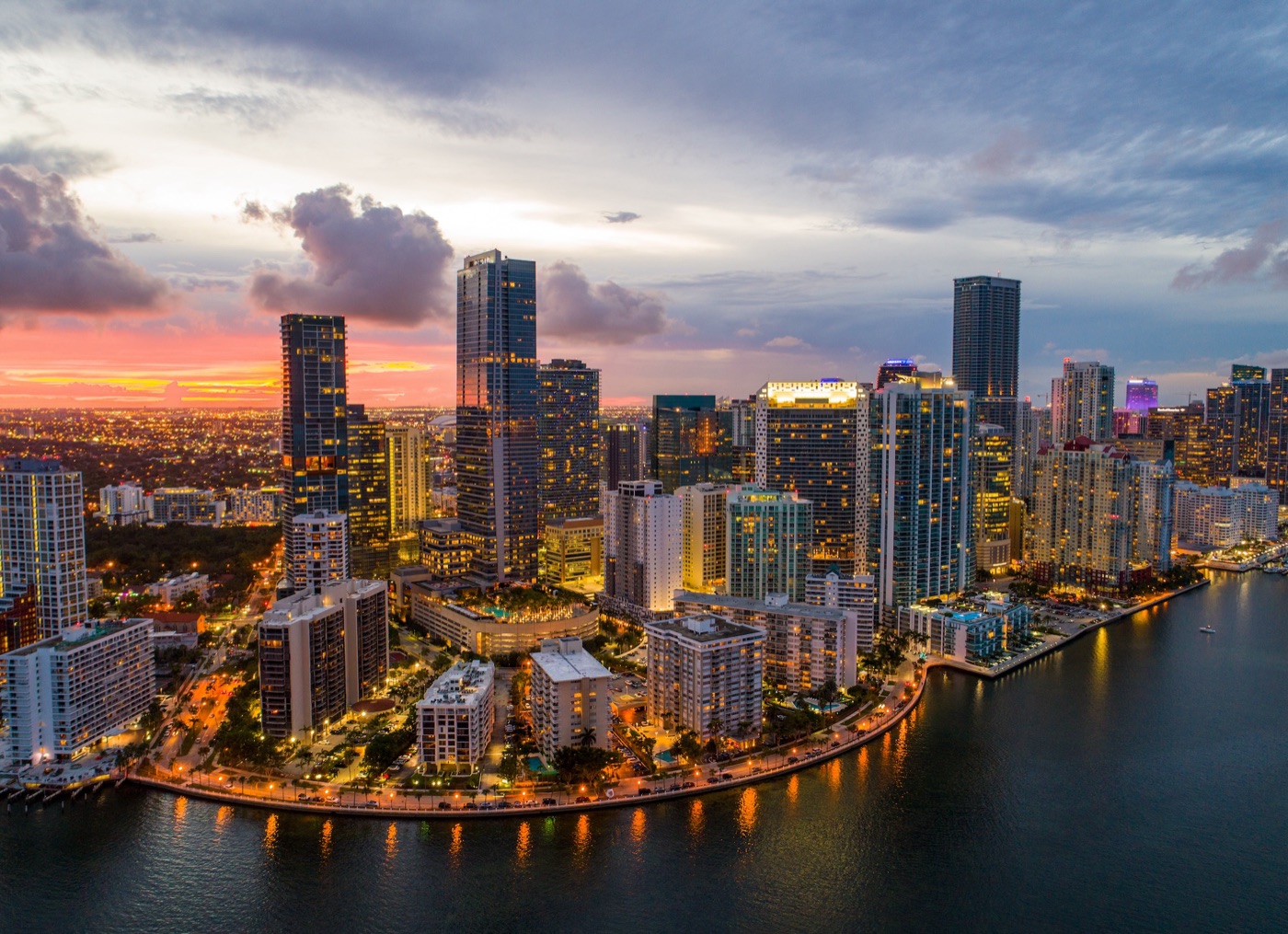
Professional photography is non-negotiable at the luxury level. I work with photographers who specialize in Miami high-rise interiors and who understand how to capture water views without overexposing the sky. A set of drone shots showing the building's position relative to Biscayne Bay or the Miami skyline can close the gap for international buyers who are making decisions without an in-person visit.
Marketing to Miami's International Buyer Pool
One of the most important competitive advantages I bring to luxury condo sellers is my ability to market directly to Latin American buyers and their representatives. A large percentage of luxury condo transactions in Miami, particularly in the $1.5 million to $5 million range, involve buyers from Colombia, Venezuela, Brazil, Mexico, Argentina, and Peru. Many of these buyers prefer to work with a bilingual agent who understands their financial structure, their questions about wire transfers and FIRPTA compliance, and the nuances of purchasing as a foreign national or through an LLC.
Hablamos Espanol, and that is not just a tagline. When I represent a seller, I market the property in Spanish to broker networks in Latin America, to WhatsApp groups used by relocation advisors in Bogota and Mexico City, and to portals that serve buyers who may never see a listing on Zillow or Realtor.com. This access to a buyer pool that many Miami agents simply do not reach is a real differentiator in closing timelines and sale prices.
Beyond the international component, I target domestic buyers relocating from high-tax states. The Northeast-to-Miami pipeline remains strong in 2026. Finance professionals, tech executives, and entrepreneurs who sold businesses or exercised equity in New York, Boston, Chicago, and California are actively looking in Brickell, Coral Gables, and Key Biscayne. Reaching these buyers requires a presence on LinkedIn, a strong network of relocation agents in those feeder markets, and the ability to present your unit as a lifestyle upgrade, not just a real estate transaction.
Working With a Listing Agent Who Knows Your Building
Not all Miami real estate agents understand the luxury condo segment equally. There are agents who are strong in single-family neighborhoods like Pinecrest or Coral Gables but have limited experience with the dynamics of high-rise buildings. There are agents who know Brickell well but have never closed a deal in Bal Harbour or Fisher Island. The nuances matter, and choosing an agent based on a low commission rather than building-specific experience is a decision that often costs sellers far more than the commission savings.
When I take a listing in a building, I research every closed sale in that building over the past 24 months. I talk to the concierge and property manager to understand what buyers are asking about. I know which floors have noise issues from the mechanical room, which units face the highway rather than the bay, and which amenities are actually used versus which ones look good on a marketing brochure. That knowledge shapes every conversation I have with a potential buyer or their agent.
I also understand the financial structure of deals in this price range. Many of my sellers are dealing with mortgages from international banks, seller concessions requests, complex 1031 exchange timelines on the buyer's side, or title issues that require coordination with foreign lenders. I have closed transactions where the buyer was using a combination of a domestic loan and a wire from a Panamanian account, and knowing how to navigate that without the deal falling apart takes experience.
If you are considering selling a luxury condo anywhere in Miami, I would welcome the conversation. Call me at (954) 833-0020 and let us talk about your building, your timeline, and what the market looks like right now for your specific unit.
Ready to Sell Your Miami Luxury Condo?
Whether you are in Brickell, Edgewater, Sunny Isles, Bal Harbour, or Key Biscayne, I am ready to help you price, prepare, and market your unit to the right buyers. Call Rangely Adames at (954) 833-0020 today.
Related Articles
September 28, 2026 · 10 min read
Argentine Buyers Guide to Miami Real Estate: Process, Financing Themes, and Neighborhood Fit (2026)
Buying Miami real estate from Argentina is workable when you separate what your agent coordinates from what your attorney, CPA, and lender decide. This support guide walks through the process, financing themes, remote closing, and neighborhood fit, then points you to the Argentina foreign-buyer hub for next steps.
Read article →February 2026 · 9 min read
Aventura Real Estate Guide: Condos, Schools & Lifestyle (2026)
Luxury high-rises, top-rated schools, and the Aventura Mall — why families and investors love this North Miami suburb.
Read article →February 2026 · 9 min read
Airbnb Investment Properties in Miami: Rules, ROI & Best Areas
Short-term rental regulations, income projections, and the best Miami neighborhoods for Airbnb investing.
Read article →