Miami Condo vs. Single-Family Home: A Complete Tax Comparison (2026)
By Rangely Adames • September 2026 • 11 min read
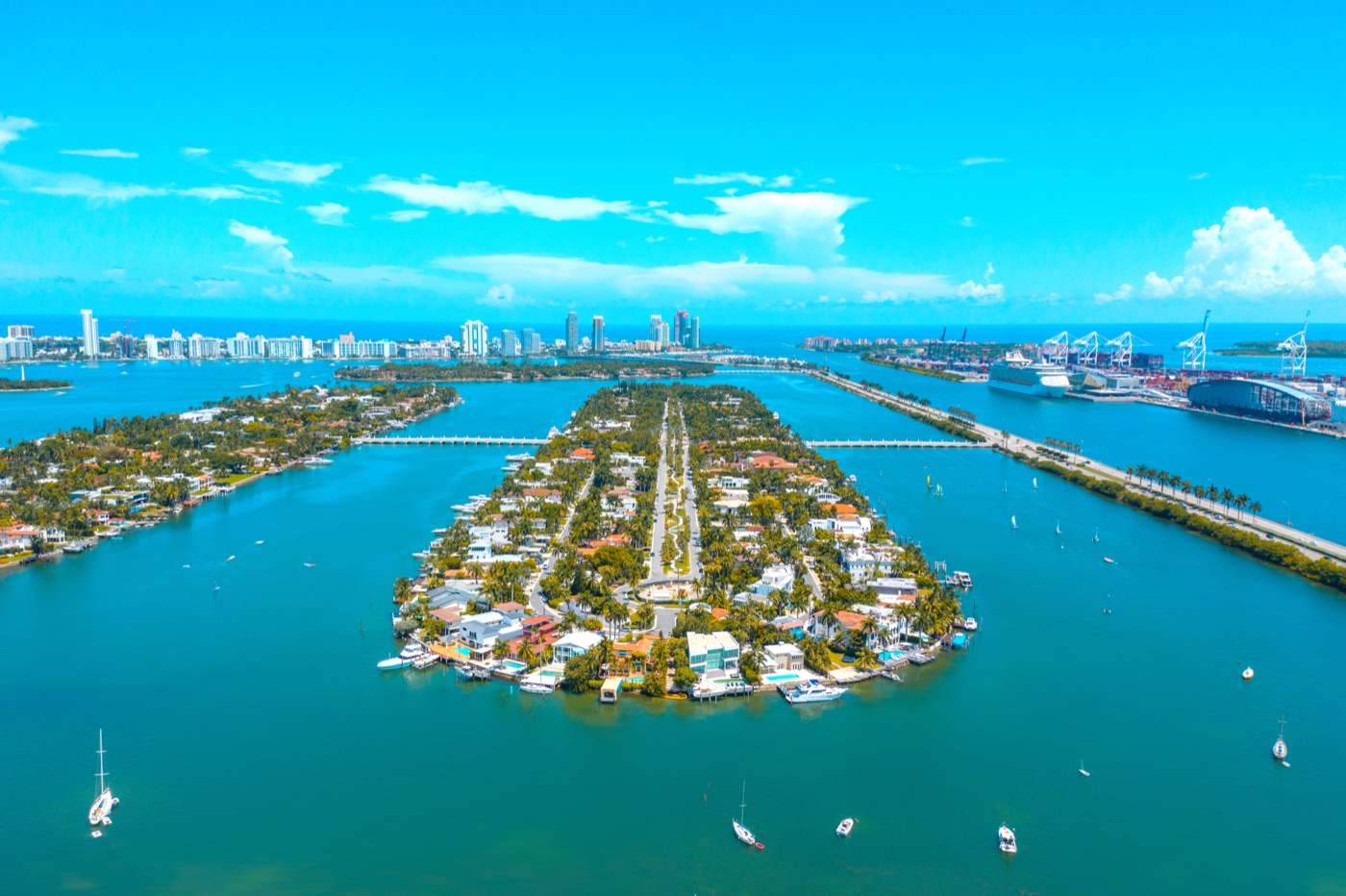
One of the most common questions I hear from buyers trying to decide between a Brickell condo and a Coral Gables single-family home is not about square footage or amenities. It is about taxes. How much will I actually pay each year? Which property type gives me better tax advantages? And how does the Florida homestead exemption work when my primary residence is a high-rise unit versus a house on a quarter-acre lot? These are smart questions, and the answers matter far more than most buyers realize before they sign a contract.
I work with buyers across the full spectrum of Miami real estate, from a $450,000 two-bedroom condo in Edgewater to a $4 million waterfront single-family home in Coconut Grove, and the tax picture is genuinely different depending on which path you choose. Miami-Dade County applies a millage rate to assessed property values, but the deductions, exemptions, additional fees, and long-term savings opportunities vary significantly between property types. Getting this wrong can cost you thousands of dollars a year.
In this post I am going to walk through every major tax consideration that separates condo ownership from single-family ownership in Miami. This is not a substitute for advice from a licensed CPA or tax attorney, but it will give you a solid foundation so you can ask the right questions and make a more informed decision. If you want to talk through your specific situation, call me directly at (954) 833-0020. Hablamos Espanol.
Have Questions About Miami Property Taxes?
I work with buyers and investors across every Miami neighborhood and can help you understand the full cost of ownership before you commit. Call (954) 833-0020 today. Hablamos Espanol.
Call (954) 833-0020How Miami-Dade Property Taxes Are Calculated for Both Property Types
Whether you buy a condo or a house, Miami-Dade County calculates your property tax the same way at the base level. The county assesses your property at market value, then applies a combined millage rate that typically falls between 18 and 23 mills depending on your municipality. One mill equals one dollar of tax per one thousand dollars of assessed value. For a property assessed at $1,000,000 with a 20-mill rate, you are paying $20,000 per year before any exemptions.
The key word there is assessed value. Florida law requires properties to be assessed at just value, which is supposed to reflect fair market value. But Florida also has a cap on how much your assessed value can increase each year once you have a homestead exemption in place. That cap, known as the Save Our Homes cap, limits annual increases to the lower of 3 percent or the Consumer Price Index. This cap applies equally to condos and single-family homes, so that part of the equation is the same regardless of property type.
Where things start to diverge is in what gets taxed and how much underlying value is subject to that millage rate. A single-family home includes both the structure and the land beneath it. A condo unit is essentially your airspace plus a proportional interest in the common elements of the building. The land beneath a condo tower is owned collectively by all unit owners through the condominium association, so you do not hold individual land ownership the same way a house owner does. This distinction becomes important when we look at assessed values and how aggressively the county appraises each property type.
Explore on rangelyadames.com
Homestead Exemption: What It Covers and What It Does Not
Florida's homestead exemption is one of the most powerful tax benefits available to primary residents, and it applies to both condos and single-family homes. If this is your primary residence, you can exempt the first $25,000 of assessed value from all property taxes, and an additional $25,000 is exempt from non-school taxes. That means up to $50,000 of your assessed value is potentially shielded from taxation, saving most homeowners between $700 and $1,100 per year depending on the millage rate in their municipality.
For a single-family home in Coral Gables assessed at $2,000,000, that exemption shaves a meaningful percentage off the total bill. For a condo in Sunny Isles Beach assessed at $700,000, the same $50,000 exemption represents a larger share of the total value, making the relative tax relief feel more significant as a percentage. The raw dollar savings are the same, but how impactful that feels depends entirely on your assessed value.
Here is something that trips up a lot of condo buyers, especially those moving to Miami from another state. The homestead exemption deadline in Florida is March 1 of the tax year. If you close on a condo in Brickell in January and miss the March 1 filing window, you will not receive the exemption until the following year. I have seen buyers lose out on a full year of savings simply because nobody reminded them about this deadline. I make sure to flag it for every client I work with who is purchasing a primary residence.
The Real Tax Difference: Land Value and Assessed Value Trends
Here is where condos and single-family homes genuinely diverge from a tax standpoint. Single-family homes in Miami's most desirable neighborhoods carry significant land value, and land value is not depreciated or discounted the way a building structure can be. In neighborhoods like Pinecrest, Coconut Grove, and Key Biscayne, the land underneath a house can represent 40 to 60 percent of the total assessed value. That land value tends to appreciate aggressively, which means the assessed value on a single-family home often climbs faster than on a comparable condo.
Condos, by contrast, sit on land owned collectively. The county apportions a share of the land value to each unit based on the condominium documents, but in a 40-story tower in Brickell or a 200-unit building in Aventura, that per-unit land allocation is relatively modest. The result is that condos often have lower assessed values per square foot than single-family homes in similar locations. A 2,000-square-foot condo in Edgewater might be assessed at $650 per square foot while a 2,000-square-foot house in Coconut Grove is assessed at $900 per square foot, even if the market value of both properties is similar.
Over time this matters quite a bit. Buyers who purchase a single-family home in Miami and lock in the Save Our Homes cap through homestead exemption can protect themselves from runaway assessments in the short term. But once that home sells and resets to market value, the new owner faces a much higher base. Condo buyers in the same scenario often start with a lower assessed value base, meaning their annual tax bill is lower from day one, even before the Save Our Homes cap kicks in.

HOA Fees Are Not Taxes, But They Function Like Them
I want to be very clear about this because I see buyers conflate these two categories all the time. Homeowners association fees and condo association fees are not property taxes. They are not deductible on your federal income tax return as a property tax expense when the property is your primary residence. However, they function very much like a recurring government-style obligation because they are mandatory and they can increase without your individual approval.
For a luxury condo in Miami, monthly HOA fees typically range from $1,200 to $4,500 per month depending on the building, its amenities, and the current reserve fund status. A $3,000 monthly HOA fee equals $36,000 per year. When you add that to a property tax bill of $18,000 to $25,000 on a $1,000,000 unit, you are looking at $54,000 to $61,000 in combined mandatory annual holding costs before insurance, utilities, or mortgage payments.
Single-family homes in gated communities like Gables Estates or Old Cutler Bay carry HOA fees too, but they are typically far lower, often in the range of $200 to $1,500 per month. A single-family home outside of a HOA pays no such fee at all. This is one of the most important real-world cost comparisons that buyers need to make, because while the condo may have a lower base property tax, the total cost of ownership often skews higher when HOA fees are factored in.
If you are buying as an investor and the condo will be a rental property, the HOA fees become a deductible operating expense on your Schedule E. That changes the calculus. But for primary residence buyers, those fees come straight out of after-tax income.
Tax Deductions: Where Condos and Single-Family Homes Align and Differ
For most buyers using a mortgage to finance their purchase, the mortgage interest deduction is available on both condos and single-family homes, up to the federal limit of $750,000 in loan principal for loans originated after December 15, 2017. Property taxes are deductible up to the $10,000 SALT cap for primary residences. These deductions apply the same way regardless of property type, so there is no inherent advantage to one over the other in this area.
Where it gets interesting is for investors. If you purchase a condo or single-family home as a rental property, you can depreciate the structure over 27.5 years. For a condo, only the unit itself and its fixtures are depreciable. The land allocation within the condo association is not depreciable, but as I mentioned earlier, that per-unit land share is often small in a large building. For a single-family home, the land portion, which can be substantial, must be excluded from the depreciation calculation. This means a condo investor may actually depreciate a higher percentage of their purchase price relative to a single-family investor in a neighborhood where land commands a premium.
Consider a $900,000 investment property in two different scenarios. A condo in Midtown Miami where the land allocation is $80,000 means $820,000 is depreciable over 27.5 years, or roughly $29,800 per year in depreciation. A single-family home in Kendall where the land is worth $250,000 means $650,000 is depreciable, or about $23,600 per year. That $6,200 annual difference in depreciable expense translates to real tax savings for investors in higher brackets.
Key Tax Considerations at a Glance
Here is a practical summary of the main tax and cost factors that differ between buying a condo and a single-family home in Miami. Every situation is different, so use this as a starting framework for your own analysis rather than a definitive guide.
Condo vs. single-family home tax comparison for Miami buyers and investors:
- Property tax base: Condos often carry lower assessed values per square foot because per-unit land value in a large building is diluted across many owners. Single-family homes in Coral Gables, Coconut Grove, and Key Biscayne carry full individual land value in the assessment.
- Homestead exemption: Available equally to condos and single-family homes. Worth up to $50,000 in assessed value deduction for primary residents. Filing deadline is March 1 each year.
- Save Our Homes cap: Limits annual increases in assessed value to 3 percent or CPI for homesteaded properties. Applies to both condos and houses. Resets to market value when the property sells.
- HOA fees: Much higher in condos, typically $1,200 to $4,500 per month for luxury buildings in Brickell, Sunny Isles, or Bal Harbour. Not tax-deductible for primary residence owners but deductible as an operating expense for rental investors.
- Depreciation for investors: Condos may offer a higher depreciable basis as a percentage of purchase price because land allocation per unit is relatively small in large buildings.
- Special assessments: Condo owners can face sudden large special assessments for major repairs or capital improvements. These are not deductible as taxes but may be added to your cost basis, reducing capital gains when you sell.
- Capital gains exclusion: Primary residence owners can exclude up to $250,000 in gains ($500,000 for married couples) when selling, regardless of whether the property is a condo or house, provided they have lived there for at least 2 of the last 5 years.
- Transfer taxes: Florida does not have a real estate transfer tax per se, but documentary stamp taxes apply to the deed at 0.70 percent of the sale price in Miami-Dade County, plus an additional surtax. This applies equally to both property types.
How Foreign Buyers and Investors Should Think About This Comparison
I work with a significant number of Latin American buyers purchasing in Miami, many of whom are not U.S. residents or citizens. For foreign buyers, the tax comparison between condos and single-family homes takes on an additional layer of complexity because certain federal tax rules apply differently based on property type, use, and the buyer's residency status.
Foreign buyers are not eligible for the Florida homestead exemption unless they are U.S. permanent residents establishing primary residence. That means for a foreign national buying a $1,500,000 condo in Brickell as a second home or investment, there is no Save Our Homes cap and no $50,000 exemption. The full assessed value is subject to the millage rate every year, and the assessment can reset to market value at any time.
FIRPTA, the Foreign Investment in Real Property Tax Act, applies when a foreign person sells U.S. real property. The buyer or closing agent is required to withhold 15 percent of the gross sales price and remit it to the IRS. This applies to both condos and single-family homes. However, there are exemptions and treaty provisions that can reduce or eliminate the withholding in certain circumstances, which is why I always recommend that foreign buyer clients work with a U.S. tax attorney before purchasing. If you are a Latin American buyer navigating these questions, call me at (954) 833-0020 because I can connect you with professionals who handle these situations regularly. Hablamos Espanol.
One more thing worth noting for foreign investors: the estate tax exposure is very different for non-resident aliens than it is for U.S. persons. A non-resident alien with a $3,000,000 condo in Miami Beach faces potential U.S. estate tax on that asset at rates up to 40 percent above a very modest exemption amount. Structuring the purchase through a foreign corporation or trust can affect both the estate tax exposure and the FIRPTA treatment, and those decisions need to be made before closing, not after.
Making the Right Choice for Your Financial Goals
After walking through all of these factors, the honest answer to the question of whether condos or single-family homes are more tax-efficient in Miami is: it depends on your situation. For a primary residence buyer who qualifies for homestead and plans to hold the property for 10 or more years, the Save Our Homes cap is one of the most powerful tax protections available in any U.S. market, and it applies equally to both property types. In that scenario, locking in a lower assessed value base through a condo purchase in a neighborhood like Edgewater or Midtown Miami may result in lower annual property taxes throughout your ownership period.
For an investor, the depreciation math often favors condos in Miami's urban cores where land values are high, but the operating cost burden from HOA fees can erode that advantage quickly. A duplex or small multifamily property in Little Havana or a single-family home in Homestead may offer a cleaner investment profile without the monthly HOA obligation, even if the depreciation benefit is slightly smaller.
In my experience, the buyers who make the best decisions are the ones who run the full five-year and ten-year cost models before choosing a property type. That means estimating property taxes, HOA fees, insurance, and expected appreciation side by side. It also means understanding how each property type fits into your broader financial plan, whether that is building equity for retirement, generating rental income, or establishing a primary residence that qualifies for capital gains exclusion when you eventually sell.
I am happy to work through these numbers with you for any specific property or neighborhood you are considering. Whether you are looking at a luxury condo in Bal Harbour, a waterfront home in Coconut Grove, or a value-add investment in Hialeah, the tax picture is something I address with every client I represent. Call me at (954) 833-0020 and let us put together a comparison that makes sense for your goals.
Ready to Find the Right Property for Your Budget and Tax Goals?
Whether you are choosing between a Brickell condo and a Coral Gables home or comparing investment strategies across Miami, I am here to help. Call Rangely Adames at (954) 833-0020 and let us talk through your options.
Related Articles
February 2026 · 9 min read
Aventura Real Estate Guide: Condos, Schools & Lifestyle (2026)
Luxury high-rises, top-rated schools, and the Aventura Mall — why families and investors love this North Miami suburb.
Read article →February 2026 · 9 min read
Airbnb Investment Properties in Miami: Rules, ROI & Best Areas
Short-term rental regulations, income projections, and the best Miami neighborhoods for Airbnb investing.
Read article →July 2026 · 10 min read
Bay Harbor Islands Real Estate Guide: Homes, Condos & Market (2026)
Waterfront homes with private docks, boutique condos, and a top-rated K-8 school make Bay Harbor Islands one of Miami's best-kept secrets. A bilingual 2026 buyer guide with prices and consejos para compradores. Hablamos Espanol.
Read article →