Miami Luxury Condo vs. Single-Family Home: Which Builds More Wealth in 2026?
By Rangely Adames • June 2026 • 11 min read
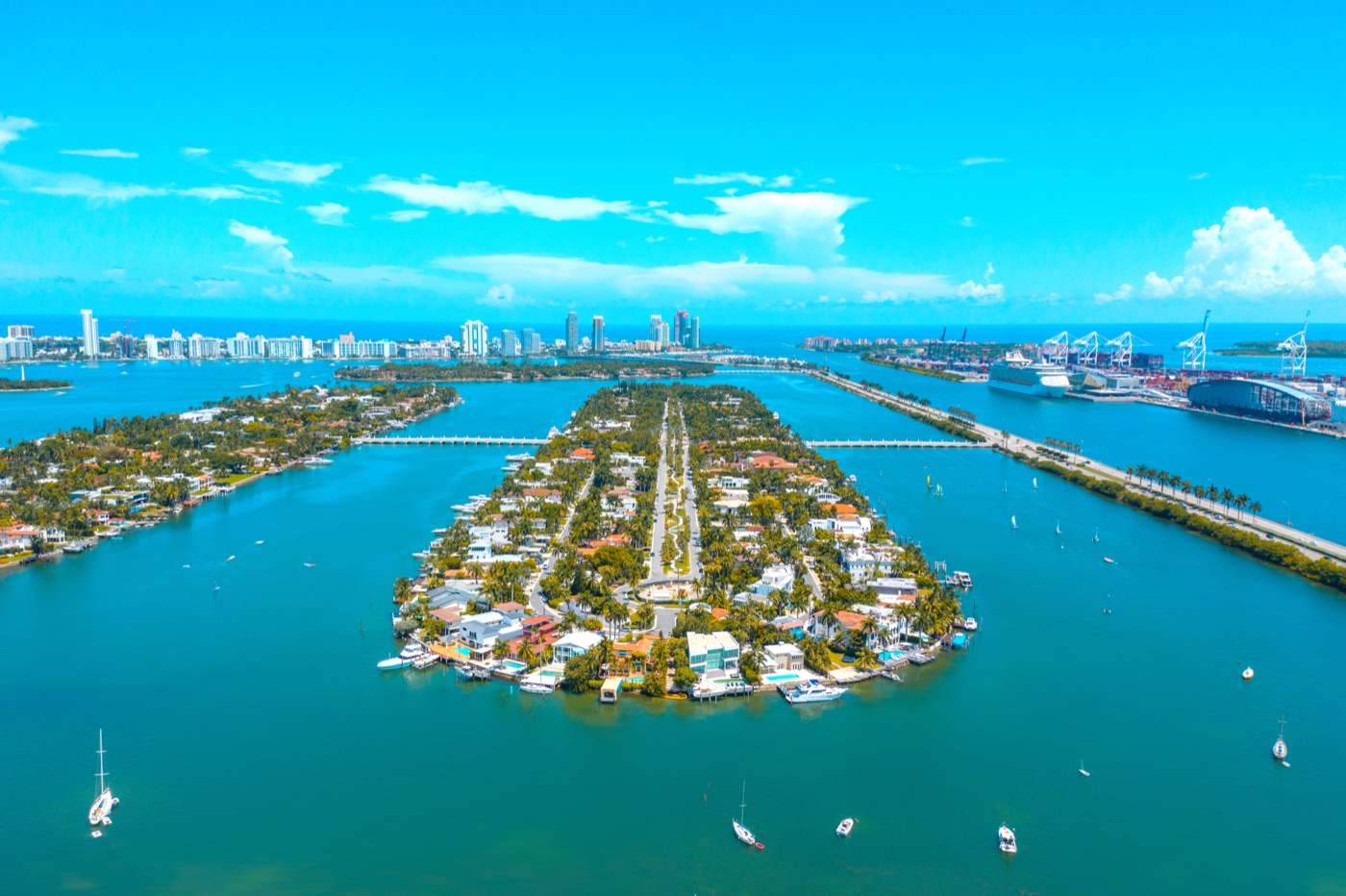
One of the most common questions I get from buyers and investors is whether a luxury condo or a single-family home will do more for their net worth over time. It sounds like a simple question, but the answer depends on the neighborhood, your timeline, how you plan to use the property, and whether you want active or passive wealth building. I have helped clients buy in Brickell, Coral Gables, Coconut Grove, Key Biscayne, Bal Harbour, and Pinecrest, and I can tell you that the right answer is almost never the same twice.
Miami is not a monolithic market. A waterfront single-family home in Coconut Grove behaves completely differently from a luxury tower unit in Edgewater or a penthouse in Sunny Isles Beach. The numbers that matter, including price per square foot, HOA fees, land value, rental yield, and annual appreciation, all shift depending on the product type and the submarket. I have watched both asset classes perform well and underperform depending on macro conditions, building-specific issues, and neighborhood momentum.
What I want to do in this post is give you a clear, honest framework for making this decision. I will walk through acquisition costs, carrying costs, appreciation history, rental income potential, and exit strategy for both asset classes. By the end, you should have a much better picture of which path makes sense for your goals. If you want to talk through your specific situation, call me directly at (954) 833-0020 and we can go over the numbers together.
Not Sure Which Property Type Is Right for You?
I work with buyers and investors across every Miami neighborhood and price point. Hablamos Espanol, and I am happy to walk through the numbers with you in detail. Call me at (954) 833-0020 to get started.
Call (954) 833-0020How Miami Prices Break Down by Asset Type
Let me start with raw acquisition costs because this is where most buyers begin the comparison. In Brickell, a well-finished luxury condo in a full-amenity building like Reach, SLS Brickell, or One Thousand Museum runs from roughly $700 per square foot on the low end to over $1,500 per square foot for upper floors with water views. A comparable 2-bedroom unit will typically land between $900,000 and $1.8 million depending on the building and floor.
A single-family home in Miami is a completely different pricing conversation. In Coral Gables, a 3-bedroom home with a pool and a good school zone sits between $1.2 million and $2.5 million. In Coconut Grove, historic properties with mature tree canopy regularly sell between $1.5 million and $4 million. In Pinecrest, which remains one of the most sought-after family neighborhoods on the mainland, you will find homes ranging from $1.1 million to well over $5 million for larger estate properties.
On a pure price-per-square-foot basis, luxury condos in prime towers often cost more than single-family homes in the same general area. A condo in Brickell at $1,100 per square foot competes against a Coral Gables home at $650 to $750 per square foot. But that comparison is misleading on its own because you are not buying the same thing. The condo buyer is purchasing a lifestyle, amenities, proximity to the urban core, and a relatively maintenance-free existence. The single-family buyer is purchasing land, privacy, long-term land appreciation, and flexibility.
Explore on rangelyadames.com
The Real Cost of Ownership: HOA Fees, Taxes, and Maintenance
This is the section that surprises most clients, especially those coming from New York or California where carrying costs are structured differently. In Miami, both asset types carry significant ongoing costs, but they look very different on paper.
Luxury condo HOA fees in Miami are not small numbers. In a building like Porsche Design Tower in Sunny Isles Beach, fees run from $3,500 to over $6,000 per month. At Brickell Heights or SLS Brickell, expect $1,200 to $2,000 monthly depending on the unit size. At One Thousand Museum, fees can exceed $5,000 per month. These fees typically cover insurance on the building exterior, water, trash, amenity maintenance, security, and sometimes cable and internet. But they do not stop there. Special assessments, which are charges levied when a building needs major repairs or capital improvements, are a very real risk in older Miami condo buildings. I always advise my condo buyers to review reserve fund balances and meeting minutes before going under contract.
Single-family homeowners in Miami pay no HOA fee in most non-gated neighborhoods, though gated communities in areas like Pinecrest or Coral Gables can carry fees of $200 to $800 per month. But single-family owners carry all maintenance themselves. A pool, landscaping, roof, HVAC, and plumbing add up. A reasonable estimate for annual maintenance on a well-maintained single-family home in Miami is 1 to 1.5 percent of the purchase price per year. On a $2 million Coconut Grove home, that is $20,000 to $30,000 annually.
Property taxes are calculated the same way for both asset types at roughly 1 to 1.2 percent of assessed value for non-homesteaded properties. Florida homestead exemption reduces that rate significantly for primary residents, capping annual assessment increases at 3 percent under the Save Our Homes rule. This matters a great deal over time. A long-term single-family homeowner in Coral Gables who bought in 2015 may be paying taxes on a 2015 assessment while their neighbor who just bought pays on the 2026 market value.
Appreciation: Which Asset Class Has Performed Better in Miami?
Looking at data from 2015 through 2025, single-family homes in Miami's prime mainland neighborhoods have generally outperformed the broader condo market on a percentage appreciation basis. Coral Gables single-family median prices moved from approximately $875,000 in 2015 to over $2 million by 2024, representing roughly 130 percent appreciation over nine years. Coconut Grove saw similar trajectories, with many properties nearly doubling over the same period.
The luxury condo market tells a more complicated story. Pre-construction condos purchased in 2015 in Brickell often delivered strong returns at delivery in 2018 and 2019. But the period from 2019 through early 2022 saw price softness in many buildings due to inventory oversupply. The post-pandemic migration surge from 2021 through 2023 dramatically changed that picture, pushing prices in buildings like Echo Brickell, Aria on the Bay, and One Thousand Museum to record highs.
In Sunny Isles Beach and Bal Harbour, ultra-luxury condos have appreciated dramatically since 2020. Units at the Residences by Armani Casa or Mansions at Acqualina that resold in 2023 and 2024 often traded at 40 to 60 percent above their original purchase price. This tier of the market, which I would define as units above $3 million in a brand-name building, has behaved more like prime single-family real estate than standard condo inventory.
My honest assessment is this: over a 10-plus year hold period, a well-located single-family home in Coral Gables, Coconut Grove, Key Biscayne, or Pinecrest has historically been one of the safest appreciation bets in Miami. For condos to compete on appreciation, you need to be in the right building, on the right floor, in a submarket with genuine demand and constrained supply.
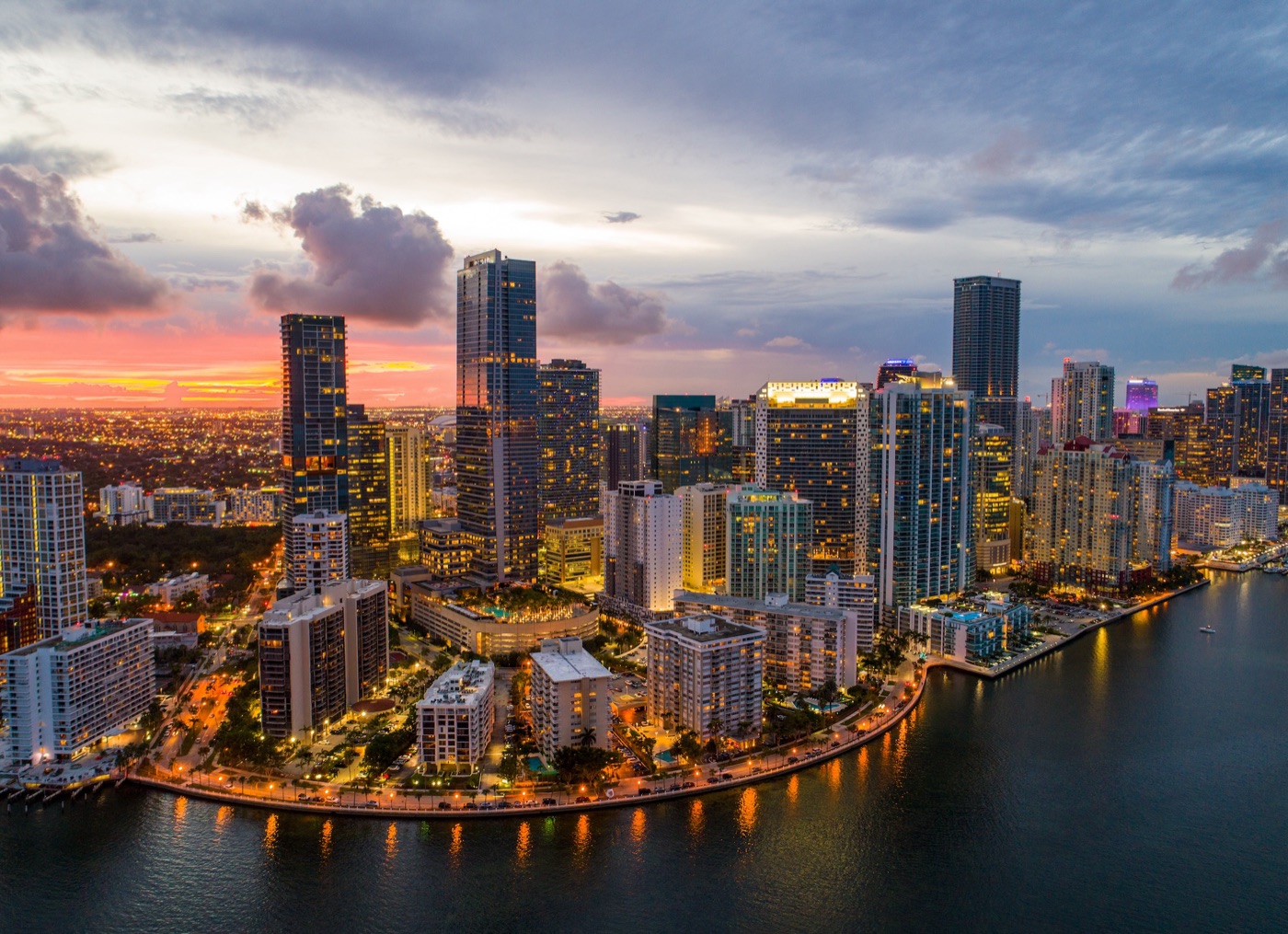
Rental Income: Condos Often Win in the Short Term
If generating rental income is part of your strategy, condos often have a structural advantage, especially in neighborhoods with strong rental demand like Brickell, Edgewater, and Midtown Miami. A furnished 2-bedroom luxury condo in Brickell can generate $4,500 to $7,500 per month on a long-term lease. In Edgewater, similar units typically rent for $4,000 to $6,000 monthly. When you account for HOA fees and property taxes, net yields are often in the 3 to 4.5 percent range on properties held without a mortgage.
Short-term rental income is significantly higher but comes with restrictions. Miami Beach has strict short-term rental regulations that vary by zoning district. The City of Miami and Miami-Dade County have their own rules layered on top. And most luxury condo associations have their own lease minimums, typically 6 or 12 months. Before buying any condo as a rental investment, I always verify both municipal rules and the specific building's rental policy. I have seen buyers lose income projections because they assumed a building allowed 30-day rentals and it did not.
Single-family homes can also generate strong rental income, particularly larger homes in Coral Gables or Coconut Grove that attract executive and relocation tenants. A 4-bedroom home in Coral Gables rents for $8,000 to $15,000 per month in many cases, which looks attractive until you factor in maintenance, management fees, and the fact that a tenant in a single-family home has more ways to create wear and tear than a condo tenant. My experience is that single-family rentals require more active management or a reliable property management relationship.
Key Factors That Should Drive Your Decision
After working with hundreds of buyers across Miami, I have found that the condo vs. single-family decision usually comes down to a handful of personal and financial factors that are specific to each client. Here are the questions I ask every buyer before we go out to look at properties.
Ask yourself these questions before deciding between a condo and a single-family home in Miami:
- How long do you plan to hold the property? Shorter holds under 5 years often favor condos in high-demand urban submarkets. Longer holds over 10 years often favor single-family homes with land.
- Do you want a turnkey, low-maintenance lifestyle or do you prefer the autonomy of owning your structure and land?
- Are you buying as a primary residence, a second home, or a pure investment? Each use case has different optimal structures.
- How important is rental income during your hold period? Condos in Brickell and Edgewater tend to have deeper rental demand pools.
- What is your budget for HOA fees in addition to your mortgage? A $1.5 million Brickell condo with a $2,500 monthly HOA fee changes your carrying cost calculation significantly.
- Are you a foreign national or non-resident buyer? Condo ownership structures are generally simpler for international clients, and I work with many Latin American buyers who prefer the ease of condo ownership. Hablamos Espanol and I understand exactly how this process works for buyers from Colombia, Venezuela, Argentina, Brazil, and beyond.
- What is your exit strategy? A Coconut Grove single-family home has a broad resale audience. A unit in a very large condo tower competes against dozens of similar units in the same building at resale.
The Land Value Argument for Single-Family Homes
One argument I make consistently to investors and long-term buyers is the land value argument. When you buy a single-family home in Coconut Grove, Coral Gables, or Key Biscayne, you own the land beneath it. Land in Miami does not get manufactured. The county is essentially built out. As the population continues to grow and redevelopment pressure increases, the land under a single-family home in a prime neighborhood becomes more valuable over time, often regardless of what sits on top of it.
I have seen this play out repeatedly in Coconut Grove, where developers have purchased older single-family homes simply to demolish them and build new construction. A buyer who paid $900,000 for a modest home in 2016 may have received $1.6 million or more by 2023 not because of the house itself but because of the lot's value in a supply-constrained market.
Condo buyers do not benefit from this dynamic in the same way. You own an airspace unit, and while the building sits on land, that land appreciation is shared across potentially hundreds of units. The per-unit benefit of land appreciation is diluted significantly. This is one of the most important structural differences between the two asset classes, and it is one that I believe favors single-family homes over very long hold periods in Miami's most desirable neighborhoods.
Neighborhood Matchups: Where Each Asset Class Makes the Most Sense
In Brickell and Edgewater, condos dominate and make sense. The urban density, the lack of single-family inventory, and the concentration of young professionals and international buyers who prefer condo living all point to condos as the right product. If you are buying in Brickell primarily to rent or to have a pied-a-terre, a well-chosen condo in a building with strong management is a solid move.
In Coral Gables, Coconut Grove, and Pinecrest, single-family homes have historically been the wealth-building vehicle of choice. The neighborhoods are suburban in character, the schools are strong, and the buyer pools at resale are deep and motivated. These are the neighborhoods where I recommend single-family homes to families, long-term residents, and investors with 10-plus year horizons.
Key Biscayne is a unique case. The island has both condos and single-family homes, and both have performed well. Single-family homes on the island have appreciated dramatically because of extreme supply constraints. A modest 3-bedroom house on Key Biscayne that sold for $1.2 million in 2015 could easily fetch $2.5 million or more today. Condos on Key Biscayne, particularly in buildings like the Grand Bay Residences or along Crandon Boulevard, have also held value well and attract both primary residents and second-home buyers.
Sunny Isles Beach is almost entirely a condo market, and within that market, the differentiation is enormous. Brand-name ultra-luxury towers have massively outperformed older commodity condo buildings. If you are buying in Sunny Isles, the building selection matters more than almost anything else. I can walk you through which buildings have the strongest resale histories and which ones carry risk. Call me at (954) 833-0020 and I will give you my honest assessment.
Bal Harbour and Aventura offer both options, though condos are far more prevalent. Fisher Island and Star Island are exceptions where even the condo product carries extreme land scarcity premiums. The rules are different at the very top of the market.
Building Wealth Through Both: The Portfolio Approach
Many of my most successful investor clients do not choose between condos and single-family homes. They hold both because the two asset classes serve different functions in a real estate portfolio. A Brickell condo generates consistent rental income and appeals to the urban buyer at resale. A Coral Gables single-family home builds long-term equity through land appreciation and attracts the family buyer at resale. Together, they balance income and growth.
If you are working with a budget of $2 to $4 million and want to build a Miami real estate portfolio, one structure I have recommended to clients is pairing a mid-range luxury condo in Brickell or Edgewater generating $4,500 to $6,000 per month in rental income with a single-family home in Pinecrest or Coral Gables held as a primary residence under homestead exemption. The condo generates cash flow while the homestead property builds equity under favorable tax treatment.
This is not a one-size-fits-all answer. Every client's financial picture, tax situation, visa status, residency plans, and risk tolerance is different. What I can do is help you model both scenarios using actual Miami market data so you go into your decision with clear numbers. Whether you are a first-time Miami buyer trying to decide between a Brickell condo and a Coconut Grove home, or a seasoned investor building a portfolio across multiple submarkets, I want to be the person you call first.
Ready to Make a Smart Miami Real Estate Decision?
Whether you are leaning toward a luxury condo in Brickell or a single-family home in Coral Gables, I can help you compare the real numbers and find the right fit for your goals. Call Rangely Adames at (954) 833-0020 today.
Related Articles
September 28, 2026 · 10 min read
Argentine Buyers Guide to Miami Real Estate: Process, Financing Themes, and Neighborhood Fit (2026)
Buying Miami real estate from Argentina is workable when you separate what your agent coordinates from what your attorney, CPA, and lender decide. This support guide walks through the process, financing themes, remote closing, and neighborhood fit, then points you to the Argentina foreign-buyer hub for next steps.
Read article →February 2026 · 9 min read
Aventura Real Estate Guide: Condos, Schools & Lifestyle (2026)
Luxury high-rises, top-rated schools, and the Aventura Mall — why families and investors love this North Miami suburb.
Read article →February 2026 · 9 min read
Airbnb Investment Properties in Miami: Rules, ROI & Best Areas
Short-term rental regulations, income projections, and the best Miami neighborhoods for Airbnb investing.
Read article →