Waterfront vs. City View Miami Condos: Which Is the Better Investment? (2026)
By Rangely Adames • June 2026 • 11 min read
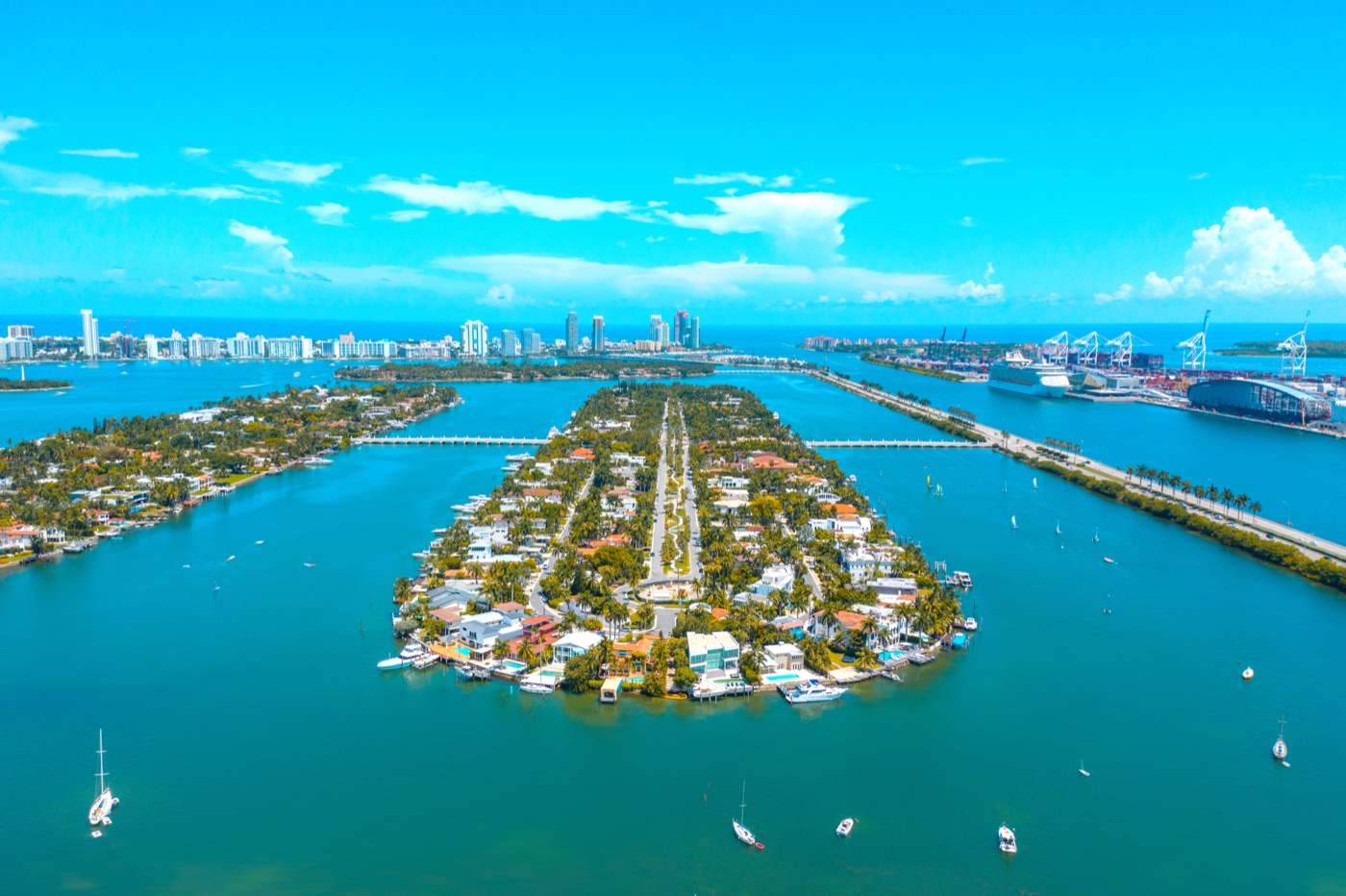
One of the most common questions I get from buyers, whether they are relocating from New York, coming in from Bogota, or downsizing from a Coral Gables estate, is whether a direct waterfront condo is really worth the premium over a high-floor unit with a stunning city skyline view. It sounds like a lifestyle question, and it is. But it is also very much a financial one, and the answer is more nuanced than most people expect.
I have sold condos at Brickell City Centre, Elysee in Edgewater, Turnberry Ocean Club in Sunny Isles, and everything in between. The price gap between a bay-front unit and a city-view unit in the same building can range from 15 percent to over 40 percent depending on the building, the floor, and the direction the unit faces. That gap matters enormously when you are calculating your cost basis, your carrying costs, and your eventual exit price.
In this post I am going to walk you through the real numbers, the neighborhoods where each view type performs best, the rental income differences, and the resale dynamics you need to understand before you write a check. Hablamos Espanol, and my team is happy to walk through all of this with you in either language. Call us at (954) 833-0020 any time.
Not Sure Which View Type Is Right for You?
I work with buyers and investors across every Miami neighborhood and price point to find the unit that matches both your lifestyle and your financial goals. Hablamos Espanol. Call (954) 833-0020 today.
Call (954) 833-0020How Miami Defines Waterfront and City Views
Before we compare the two, it helps to define what we are actually talking about, because Miami's geography makes this more complicated than most cities. Miami sits between Biscayne Bay to the east and the Everglades to the west, with the Atlantic Ocean just beyond Miami Beach. Depending on the neighborhood, a waterfront view could mean direct ocean views in Sunny Isles or Bal Harbour, open bay views in Edgewater or Key Biscayne, intracoastal views in Aventura, or even a partial water glimpse from a mid-rise in Brickell.
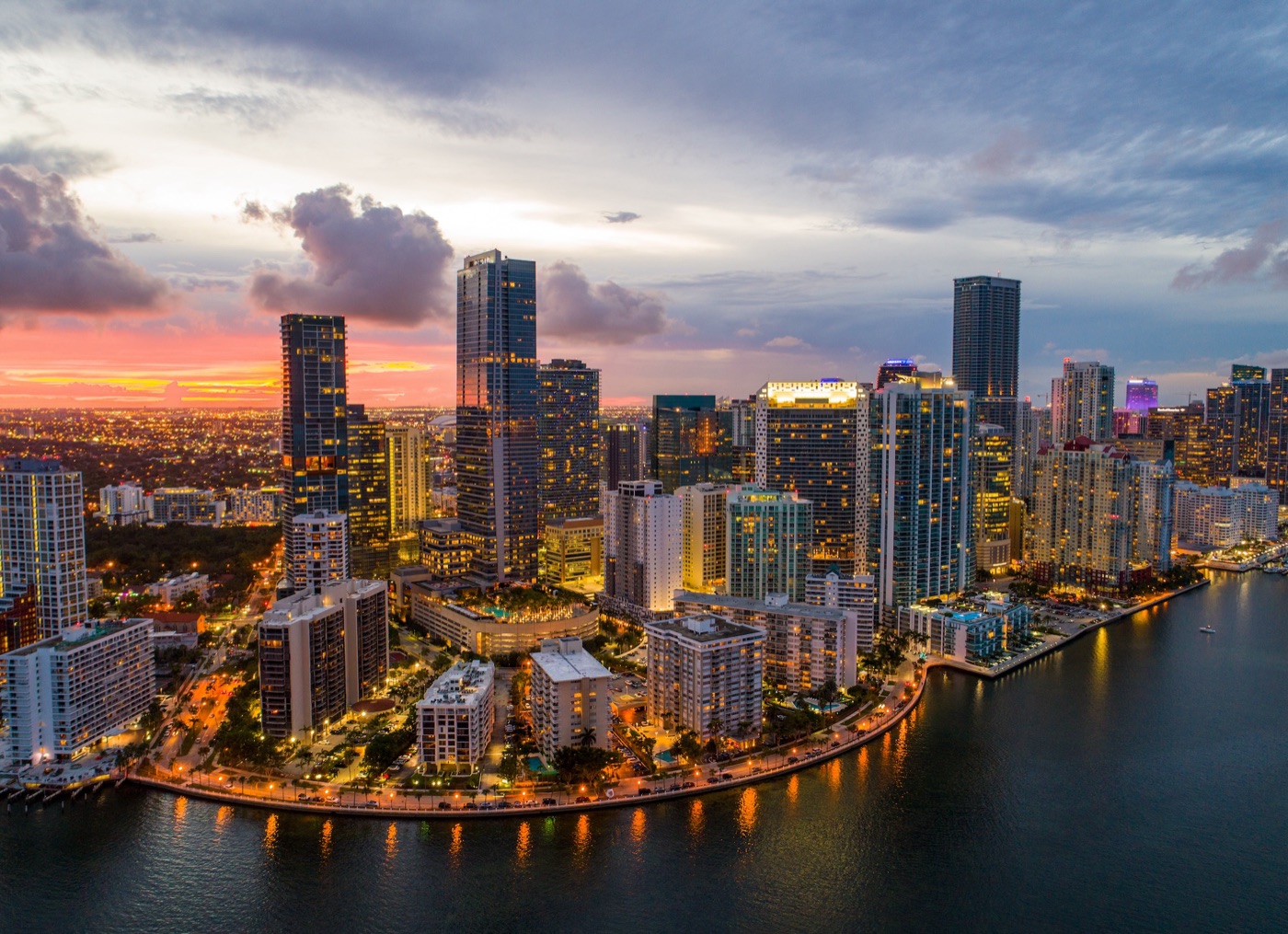
A city view, on the other hand, typically means you are looking at the Miami skyline, which is genuinely spectacular, especially from the upper floors of a Brickell or Downtown tower at night. Some of the most dramatic views I have ever seen in this market are north-facing units in Brickell Key looking straight up the Miami River and into the glittering downtown core. Those units sell at a meaningful discount to bay-front units in the same building, and that discount represents either an opportunity or a tradeoff depending on your goals.
There is also a middle category worth mentioning: units with split views, meaning partial water and partial city. These are common in Edgewater and Midtown buildings where the bay is visible at an angle from the balcony. Split-view units tend to command prices somewhere between the two extremes and often represent strong value because they offer both experiences without the full waterfront premium.
Explore on rangelyadames.com
The Price Premium: What the Numbers Actually Look Like
In my experience, the waterfront premium in Miami ranges from about 15 percent to 45 percent over a comparable city-view unit in the same building on a similar floor. The range is wide because it depends heavily on the building and the neighborhood. Let me give you some concrete examples based on what I have seen in the market.
At a luxury tower like Aria on the Bay in Edgewater, a direct bay-view unit on a high floor might be priced around $1,100 to $1,250 per square foot, while a similar unit facing west toward the city comes in at $850 to $950 per square foot. That is a gap of roughly 25 to 30 percent for units that are otherwise nearly identical in finish, layout, and amenities.
In Sunny Isles Beach, the gap is often larger. At a building like Porsche Design Tower or Armani Casa, direct oceanfront units routinely trade at $2,500 to $3,500 per square foot, while west-facing units in the same buildings can be found at $1,600 to $2,100 per square foot. That 40-plus percent gap is one of the widest in the Miami market, which tells you something important: in Sunny Isles, the entire value proposition of the neighborhood is the ocean, so city-view units there have a harder time justifying their price to buyers.
In Brickell, the dynamic is somewhat different. Many buyers and renters in Brickell are drawn there for the urban lifestyle, the proximity to financial firms and law offices, and the walkability. A high-floor city-view unit looking north or west toward the skyline at a building like SLS Brickell or One Thousand Museum can command a smaller gap relative to a bay-view unit, sometimes as little as 10 to 15 percent. The city view is actually the product in Brickell in a way that it simply is not in Sunny Isles.
Rental Income: Does the Waterfront Premium Pay for Itself?
This is the critical question for investors, and the honest answer is: sometimes, but not always. The waterfront premium adds to your purchase price, your property taxes, and often your HOA fees if the building is a beachfront or bayfront property with marina access or beach club amenities. So you need to generate enough incremental rental income to justify that higher cost basis.
In my experience, short-term rental income for a direct oceanfront unit in Sunny Isles Beach or Miami Beach can run 20 to 35 percent higher per night than a comparable city-view unit. A two-bedroom oceanfront unit in a building that permits short-term rentals might generate $4,500 to $7,000 per month in net income during peak season, compared to $3,200 to $5,000 for a city-view unit in a similar location. That incremental income is real, but so is the higher purchase price.
For long-term rentals, the gap narrows considerably. Long-term tenants, meaning those signing 12-month leases, tend to be less driven by the view and more driven by floor plan, finishes, building amenities, and proximity to work or school. A city-view unit at a well-maintained building in Brickell with a good amenity package can command $4,500 to $6,500 per month for a two-bedroom, while a waterfront unit in the same submarket might push $5,500 to $7,500. The premium exists, but it is closer to 15 to 20 percent on the rental side, while the purchase price premium is often 25 to 35 percent.
That math does not always work in favor of the waterfront unit for pure yield-focused investors. Where the waterfront unit wins is typically in appreciation and exit value, which I cover in more detail below.
Resale Value and Appreciation: Which View Holds Better?
Looking back at Miami market cycles over the past 20 years, waterfront condos have generally held their value better during downturns and appreciated more aggressively during upturns. That is not a universal rule, but it reflects a simple supply and demand reality: there is a finite amount of waterfront in Miami. You cannot build a new ocean. Developers can always build another glass tower with a city view.
During the 2008 to 2012 downturn, waterfront units at buildings like Icon Brickell and 1800 Club in Edgewater declined in value, but they recovered faster than their city-view counterparts in the same buildings. By 2015 to 2016, direct bay-view units at those buildings had largely recovered to pre-crisis prices, while some city-view units were still trading below their peak valuations.
In the post-2020 surge, direct waterfront properties in markets like Edgewater, Coconut Grove, and Key Biscayne saw some of the strongest appreciation in the entire Miami market. A bayfront unit in Edgewater that sold for $700,000 in 2019 was trading at $1.1 to $1.3 million by 2022. That is 55 to 85 percent appreciation in three years, which outpaced the overall Miami condo market.
City-view units also appreciated during that period, but the gains were more moderate and more closely tied to the overall market rather than to any specific scarcity premium. My general guidance to clients who are buying for a 5-plus year hold is that the waterfront unit is likely to give you better total return, including appreciation, even if the initial yield is slightly lower. For clients who are focused on short-term cash flow or who plan to hold for 2 to 3 years, the city-view unit at a lower price point can sometimes produce a better return on equity.
Neighborhood-by-Neighborhood Breakdown
Not all neighborhoods in Miami treat this tradeoff the same way. Here is how I think about the waterfront versus city-view question across the markets I work in most often.
Here is a quick neighborhood breakdown of how the waterfront premium plays out across Miami:
- Edgewater: The bay-view premium here is strong and well-supported. Buildings like Elysee, Missoni Baia, and Aria on the Bay have established a genuine scarcity market for direct bay-front units. City-view units in Edgewater can feel like a compromise because the neighborhood's entire identity is built around Biscayne Bay access.
- Brickell: City views are more defensible here. The skyline from a high floor on the north or west side of a Brickell tower is genuinely iconic. Buyers in Brickell are often professionals who value the urban energy, and city-view units here tend to rent and resell well relative to the overall market.
- Sunny Isles Beach: The ocean is everything. City-view units in Sunny Isles face west toward the Intracoastal and the mainland, and while the sunsets are beautiful, the resale market for those units is thinner. I always advise buyers in Sunny Isles to stretch for the oceanfront if their budget allows.
- Miami Beach and South Beach: Ocean-facing units on Collins Avenue command the highest prices, but the city and bay views from west-facing units at buildings like the Faena House or 1 Hotel can be extraordinary and represent better value per square foot in many cases.
- Key Biscayne: Nearly the entire island offers water proximity, but units with direct bay or ocean views at buildings like the Grand Bay Club or Ocean Club command meaningful premiums. The total supply of units on Key Biscayne is small, which keeps both view types well-supported.
- Aventura: Intracoastal-facing units at buildings like Turnberry Ocean Colony or Porto Vita carry the waterfront premium. City-view units in Aventura face west toward the city of Aventura and Broward County, which is a less compelling view story.
- Coconut Grove: Single-family homes and low-rise condos dominate here, and bayfront properties in the Grove are among the most stable luxury assets in all of South Florida. City-view inventory is limited and less relevant to this market.
Insurance, HOA Fees, and the Hidden Cost of Waterfront
One thing buyers sometimes underestimate is how much more expensive it can be to own a waterfront unit from an ongoing cost perspective. This is a real financial consideration that I always make sure my clients understand before they make an offer.
Homeowners insurance for a direct oceanfront or bayfront condo unit in Miami is substantially higher than for an inland city-view unit. Flood insurance under the National Flood Insurance Program or through private carriers can add $3,000 to $8,000 per year to your carrying costs depending on the building's flood zone designation and your unit's floor. Most high-floor units in certified concrete high-rise buildings are not required to carry individual flood policies, but it is worth understanding your specific building's situation.
HOA fees at waterfront buildings in Miami often run higher than comparable city-view buildings. Beachfront buildings in Sunny Isles like the Residences by Armani Casa carry monthly HOA fees of $4,000 to $7,000 for large units, partly because of the cost of maintaining beach club facilities, oceanside landscaping, and the additional wear that salt air and storm exposure put on the building envelope. Some bayfront buildings in Edgewater and Brickell Key carry fees in the $1,800 to $3,500 per month range.
City-view buildings in Brickell or Downtown Miami tend to have HOA fees in the $1,200 to $2,500 per month range for comparable units. That difference of $500 to $2,000 per month in HOA fees is real money over a 5 or 10-year hold. It needs to be factored into your total cost of ownership analysis alongside the purchase price premium.
Property taxes also follow the purchase price, so a waterfront unit priced 30 percent higher than a city-view unit will carry roughly 30 percent higher property taxes. In Miami-Dade County, the effective property tax rate for non-homesteaded properties runs approximately 1.9 to 2.1 percent of assessed value annually. On a $2 million waterfront unit, that is $38,000 to $42,000 per year in property taxes compared to roughly $26,000 to $29,000 on a comparable $1.4 million city-view unit.
Who Should Buy a Waterfront Unit and Who Should Buy City View
After years of working through this decision with clients, I have developed a fairly clear framework for who benefits most from each option.
Waterfront units make the most sense for buyers who plan to hold for 5 or more years and want to maximize long-term appreciation, buyers who will use the unit as a primary or secondary residence and want to genuinely enjoy the lifestyle they are paying for, foreign buyers and Latin American clients who are parking capital in Miami and want the most universally appealing asset for eventual resale, and buyers in markets like Sunny Isles or Key Biscayne where the waterfront view is genuinely the main event.
City-view units make the most sense for buyers focused on maximizing cash-on-cash rental yield in the near term, buyers in Brickell or Downtown Miami where the urban lifestyle and walkability are the primary draw, buyers who want to own in a premium building but need to manage their initial outlay, and investors who want to diversify across multiple units and prefer two city-view units at $800,000 each over one waterfront unit at $1.6 million.
I work with a lot of clients from Colombia, Venezuela, Argentina, and Mexico who are buying in Miami as a safe-harbor investment and eventual relocation option. For many of those clients, a direct waterfront unit is the right call because it holds its value well across market cycles and is highly liquid when the time comes to sell. The brand of Miami waterfront real estate is genuinely global, and that liquidity advantage is worth something real.
If you are unsure which category fits your situation, the best thing you can do is pick up the phone and walk through the numbers with me directly. Hablamos Espanol, and I can run a full cost-benefit analysis on specific buildings and units you are considering. Call me at (954) 833-0020 and let's talk through your goals.
Questions to Ask Before You Decide
Before you commit to either a waterfront or city-view unit, there are several questions I always work through with my buyers during the due diligence process.
First, ask whether the view is protected. Some buildings in Edgewater and Brickell face the bay today but sit directly in front of an empty lot where a new tower could be built in the next five years. A waterfront view that is not protected by permanent open space or a low-rise neighbor is a risk. I always check the zoning and active development applications for parcels within visual range of any unit I am helping a client evaluate.
Second, ask what the rental restriction policy is. Many luxury buildings in Miami restrict short-term rentals entirely, which limits your income options to long-term tenants. Others allow rentals after a waiting period of 1 to 2 years. This policy does not change based on the view, but it significantly affects your income projections and should be confirmed before you close.
Third, ask for the last three years of special assessment history and the current reserve fund balance. Waterfront buildings face higher maintenance costs from salt air corrosion, wind exposure, and the general demands of coastal environments. A building with a thin reserve fund and a history of special assessments is a financial risk regardless of how beautiful the view is.
Fourth, ask about the floor and its effect on the view. In many Miami buildings, the real waterfront premium does not kick in until the 15th or 20th floor, where you clear the surrounding tree canopy and lower rooftops. A unit on the 8th floor marketed as a bay view might actually deliver a partial view at best, especially at buildings along the bay in Edgewater where the Baywalk promenade and landscaping can obscure sightlines from lower floors.
These are exactly the kinds of questions my team helps clients work through every day. The Miami condo market is deep and detailed, and getting the right answers before you sign a contract can save you from buying the wrong unit at the wrong price.
Ready to Find Your Miami Condo?
Whether you are drawn to a direct bay view in Edgewater or a dramatic skyline view in Brickell, I can help you find the right unit and negotiate the right price. Call Rangely Adames at (954) 833-0020 and let's get started.
Related Articles
February 2026 · 9 min read
Aventura Real Estate Guide: Condos, Schools & Lifestyle (2026)
Luxury high-rises, top-rated schools, and the Aventura Mall — why families and investors love this North Miami suburb.
Read article →February 2026 · 9 min read
Airbnb Investment Properties in Miami: Rules, ROI & Best Areas
Short-term rental regulations, income projections, and the best Miami neighborhoods for Airbnb investing.
Read article →July 2026 · 10 min read
Bay Harbor Islands Real Estate Guide: Homes, Condos & Market (2026)
Waterfront homes with private docks, boutique condos, and a top-rated K-8 school make Bay Harbor Islands one of Miami's best-kept secrets. A bilingual 2026 buyer guide with prices and consejos para compradores. Hablamos Espanol.
Read article →