Miami Neighborhood Price Trends to Watch in 2026
By Rangely Adames • May 2026 • 11 min read
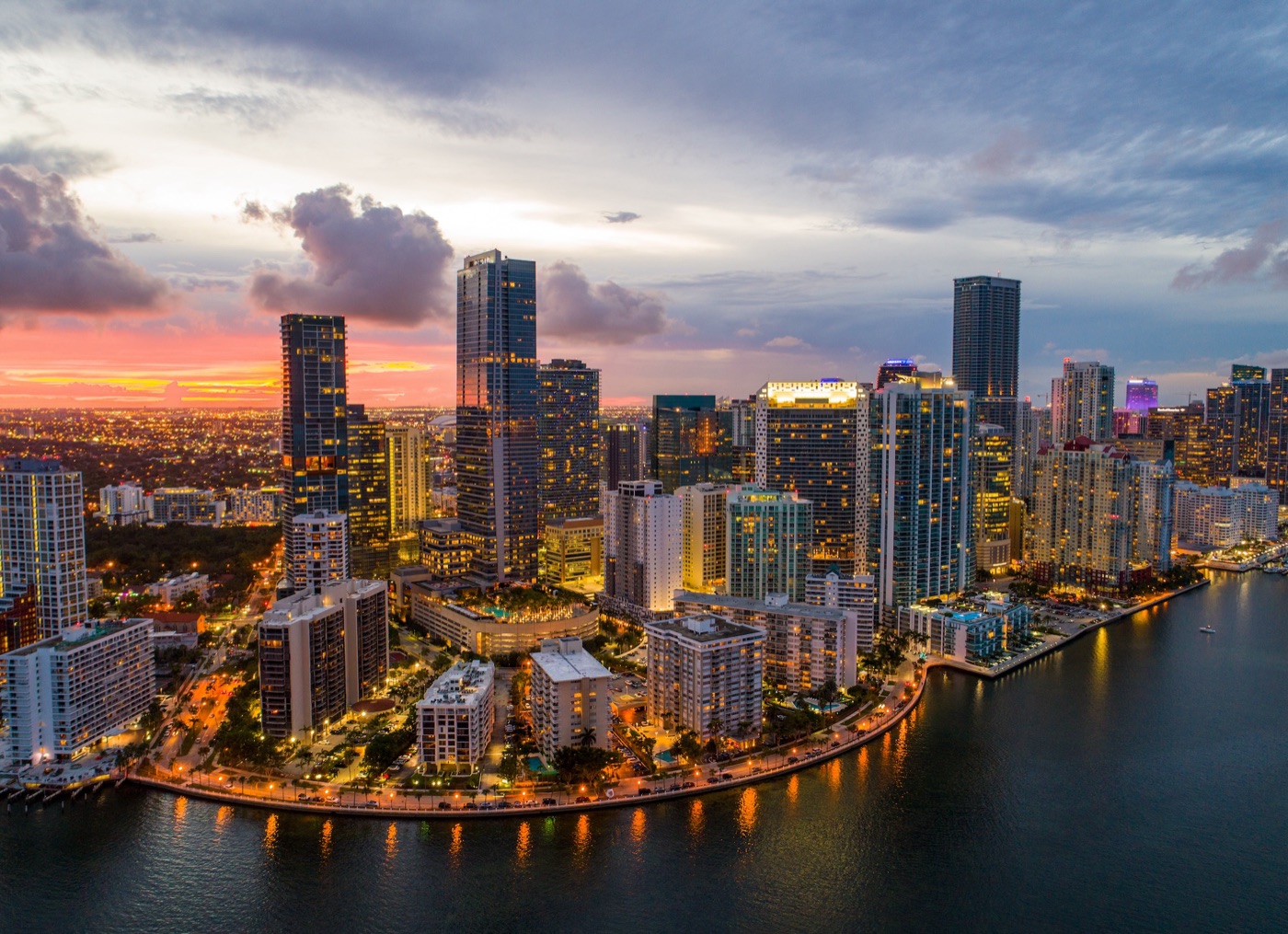
I get some version of the same question almost every week: where are Miami prices going? My clients want to know whether they should buy now, wait, or move their budget from one neighborhood to another. It is a fair question, and the honest answer is that Miami does not move as one single market. Brickell can be cooling while Coconut Grove is heating up. Sunny Isles can be absorbing inventory while Edgewater is nearly sold out of certain unit types. Understanding those differences is what separates a smart purchase from an expensive mistake.
I have been working with buyers, sellers, and investors across Miami-Dade for years, and the patterns I track are rooted in real closed sales data, absorption rates, and conversations with other agents, developers, and title companies. What I share here is not speculation. It is a ground-level read on what I am actually seeing in transactions right now and what the numbers suggest heading into 2026.
Whether you are a first-time buyer stretching your budget, a Latin American investor looking for a stable dollar-denominated asset, or a longtime Miami homeowner trying to decide if now is the right time to sell, this breakdown is for you. Hablamos Espanol, and I am happy to walk through any of this with you directly. Call me at (954) 833-0020 and we can talk through your specific situation.
Not Sure Which Neighborhood Fits Your Budget?
I break down price trends by neighborhood and build a real cost-of-ownership picture for every client before they make an offer. Hablamos Espanol. Call (954) 833-0020 today.
Call (954) 833-0020Why Miami Prices Do Not Move as One Market
Miami-Dade County covers roughly 2,431 square miles and contains dozens of distinct neighborhoods, each with its own buyer pool, inventory levels, price per square foot, and demand drivers. Treating the entire county as a single market leads to bad decisions. I have seen buyers pass on Edgewater condos because they read a headline about Brickell inventory rising, when those are two entirely different product categories with different price ceilings.
The most important thing I tell clients is to track price per square foot, days on market, and the ratio of list price to sale price by neighborhood and by property type. A 3-bedroom single-family home in Coral Gables and a 3-bedroom condo in Brickell City Centre are not competing with the same buyer. They attract different income profiles, different financing profiles, and different motivations.
In my experience, the neighborhoods with the strongest price resilience share a few characteristics: limited land supply, strong rental demand as a backstop, proximity to good schools or lifestyle amenities, and a diverse mix of end users and investors. When I evaluate a neighborhood for a client, those are the factors I look at first before I even pull a price history.
Explore on rangelyadames.com
Brickell: Inventory Is Rising but Demand Remains Solid
Brickell has been the poster child for Miami's high-rise boom, and it remains one of the most liquid condo markets in the country. Right now, active inventory in Brickell has climbed compared to 2022 and 2023 levels, which is giving buyers more negotiating room than they had during the frenzy. That does not mean prices are falling. What it means is that the days of waiving inspections and bidding 10 percent over ask are largely over for resale units.
Resale condos in Brickell are currently ranging from roughly $650 per square foot on the low end in older buildings to well over $1,500 per square foot in new construction towers like St. Regis Brickell or One Thousand Museum. The middle tier, buildings from the 2010s in good condition with updated amenities, is sitting around $850 to $1,100 per square foot depending on floor and view.
For investors, the Brickell rental market is holding up well. A 1-bedroom unit in a Class A building is renting for $3,200 to $4,500 per month. A 2-bedroom with a bay view can reach $5,500 to $7,000. HOA fees in Brickell vary widely. Older buildings can run $1,200 to $1,800 per month, while newer ultra-luxury towers with full-service amenities can exceed $3,500 per month. Buyers need to factor that into their yield calculations.
My read for 2026 is that Brickell prices will hold or appreciate modestly in the 3 to 5 percent range for well-located units in buildings with strong financials. Buildings with deferred maintenance or looming special assessments will face price pressure as buyers become more diligent about condo due diligence post-Surfside.
Coral Gables and Coconut Grove: The Single-Family Premium Is Holding
If you want to understand the floor under Miami luxury single-family prices, look at Coral Gables and Coconut Grove. Both neighborhoods have extremely limited land supply, strong school districts, mature tree canopies, and a buyer pool that includes corporate executives, physicians, attorneys, and Latin American families looking for stable long-term homes. That combination makes prices here more resistant to macro headwinds than almost anywhere else in Miami-Dade.
In Coral Gables, single-family homes in the $1.5 million to $3.5 million range have been moving consistently. The under $2 million category is still competitive, with well-priced homes receiving multiple offers within the first two weeks. Above $5 million, the market is more selective and days on market tend to stretch to 60 or 90 days. Updated homes on larger lots near Granada Golf Course or along the Gables waterways command significant premiums.
Coconut Grove has shifted meaningfully over the past five years. The neighborhood shed some of its reputation for being sleepy and has attracted younger affluent buyers who want walkability, proximity to Biscayne Bay, and a village feel without living in a high-rise. Homes in the Grove on lots of 10,000 square feet or more are selling in the $2 million to $4.5 million range, with the best bayfront parcels pushing well beyond $10 million.
Property taxes in both neighborhoods follow Miami-Dade County rates, which run approximately 1.8 to 2.1 percent of assessed value for non-homesteaded properties. Buyers moving from low-tax states sometimes underestimate this line item, and I always walk through the full cost of ownership before anyone makes an offer.
Edgewater and Midtown: The Value Play That Is Closing Fast
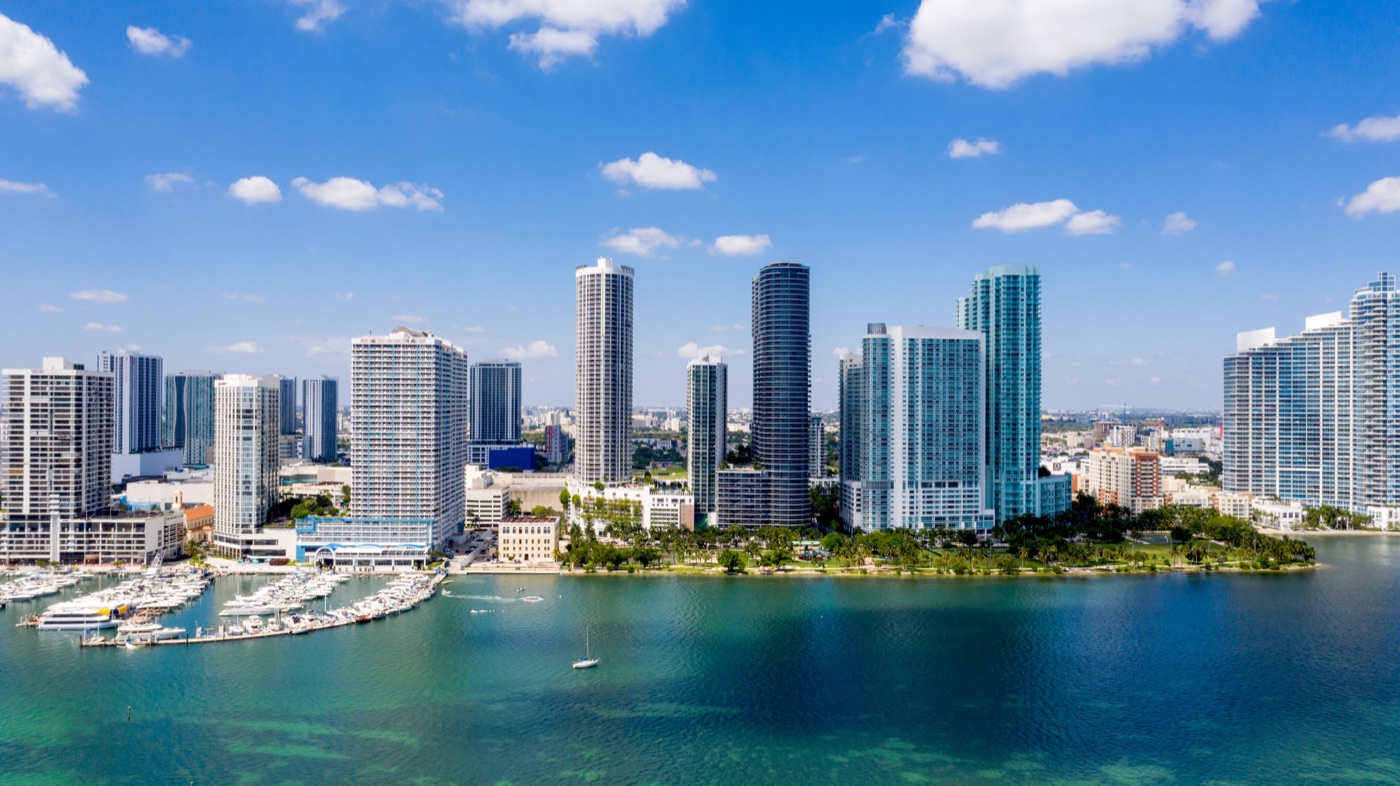
For the past several years, Edgewater and Midtown Miami have been the areas where buyers could get a newer condo with bay views at a meaningful discount to Brickell or Miami Beach. That gap is narrowing. New towers like Missoni Baia and Aria on the Bay set new price benchmarks, and the pipeline of upcoming projects continues to attract developer interest.
Current resale prices in Edgewater are running roughly $650 to $950 per square foot for mid-tier buildings and $1,000 to $1,400 per square foot for the premium waterfront towers. That is still a 15 to 20 percent discount compared to comparable products in Brickell, but it was a 30 percent discount three years ago. The gap is closing as the neighborhood fills in with restaurants, retail, and the kind of street-level activity that makes it feel like a real urban neighborhood.
For investors, Edgewater has very favorable short-term rental rules compared to some other Miami neighborhoods, and properties in buildings that allow rentals can generate gross yields of 5 to 7 percent annually at current price levels, though that varies significantly by unit size and building. I track the specific rental policies for buildings in this area closely, because policies can change and a policy change can affect your return materially.
My 2026 outlook for Edgewater is the most bullish of any neighborhood I cover. Infrastructure improvements along Biscayne Boulevard, continued residential density, and spillover demand from Brickell all point to continued price appreciation in the 5 to 8 percent range for well-located units.
Sunny Isles Beach and Aventura: International Demand Is the Defining Factor
Sunny Isles Beach and Aventura operate on a different demand dynamic than the rest of Miami. These corridors attract a high concentration of buyers from Venezuela, Argentina, Brazil, Colombia, and Russia, as well as Israeli and Canadian buyers. When international capital flows into Miami, these neighborhoods often feel it first. When there is uncertainty in those source markets, inventory builds.
Right now, Sunny Isles inventory has grown from the near-zero levels of 2021 and 2022, particularly in the $1 million to $3 million condo range. However, the ultra-luxury segment, defined here as $5 million and above, remains tight. Turnberry Ocean Club and Porsche Design Tower units are still trading at strong prices because the supply of genuine trophy product is limited.
Aventura has a more diversified buyer pool and benefits from proximity to top-rated public schools including Aventura City of Excellence School. The average condo price in Aventura runs $450 to $750 per square foot for resale units, which is more accessible than Sunny Isles. Single-family and townhome inventory in Aventura is extremely thin because the city is almost entirely built out.
For Latin American clients specifically, I spend time explaining how the strong dollar, Florida's lack of state income tax, and Miami's legal protections for property owners make this corridor particularly attractive as a wealth preservation strategy. Hablamos Espanol, and I am very familiar with the concerns and priorities of international buyers navigating this process. If you are evaluating these neighborhoods, call me at (954) 833-0020 and I can give you a current picture of what is actually available.
Key Biscayne and Miami Beach: Premium Pricing With Different Risk Profiles
Key Biscayne and Miami Beach are both premium markets, but they carry different risk considerations that buyers should understand clearly before committing.
Key Biscayne is one of the most insulated luxury markets in South Florida. It is a barrier island with a fixed inventory of homes and condos, excellent schools, low crime, and a community feel that is rare at this price point. Single-family homes on the island range from approximately $2.5 million for a modest updated house to over $20 million for bayfront estates. The challenge for buyers is that the market is small and competitive. When a well-priced home hits the market on Key Biscayne, it often goes under contract in days.
Miami Beach is a much larger and more complex market. South Beach condos in buildings with aging infrastructure are facing significant special assessment risk, and I have seen buyers walk away from deals after reviewing condo financials in detail. Mid-Beach, particularly the area around the Faena District and Indian Creek, is seeing sustained interest from ultra-high-net-worth buyers. North Beach and Surfside have attracted buyers looking for value relative to South Beach while still being on the barrier island.
Flood zone designations matter enormously on Miami Beach. Most of the island sits in FEMA Zone AE, which requires mandatory flood insurance. Annual flood insurance premiums can run $4,000 to $12,000 or more depending on structure type, elevation certificate, and coverage limits. I always factor the full insurance load into any analysis I prepare for buyers considering Miami Beach.
What Buyers and Sellers Should Watch in the Second Half of 2025 and Into 2026
Several factors are shaping the trajectory of Miami prices right now, and I think buyers and sellers both benefit from understanding them clearly rather than reacting to headlines.
Interest rates remain the biggest variable for the broad market. When rates were at 3 percent, buyers could afford significantly more home than they can at 6.5 to 7 percent. That has pushed some buyers toward smaller units or further from prime locations. It has also kept some sellers locked in place because they do not want to give up their low-rate mortgages. That lock-in effect is one reason inventory has been slower to build than economists predicted.
New construction delivery is the second major factor to watch. Several large condo towers that broke ground in 2022 and 2023 are scheduled to deliver in 2025 and 2026. When those units hit the market simultaneously, they create temporary supply pressure in their immediate sub-markets. Buyers in pre-construction should understand where their building sits in that delivery timeline and what else is being delivered nearby.
The insurance market in Florida continues to be a concern. Citizens Property Insurance reforms, private market exits, and rising premiums are adding to the cost of homeownership statewide. In Miami, homeowners insurance on a $1.5 million single-family home can run $15,000 to $30,000 per year or more depending on location, construction type, and coverage. I strongly recommend buyers get insurance quotes before going under contract rather than after, because the numbers can meaningfully change a deal's economics.
Finally, Miami's continued population and employment growth is a fundamental tailwind. The city added significant financial services, technology, and legal employment over the past five years, and that base is not disappearing. Companies like Citadel, Blackstone, and numerous hedge funds established or expanded Miami operations. That employment base supports demand for housing at the upper end of the market, which tends to have a trickle-down effect on prices throughout the metro.
The specific factors I am watching most closely heading into 2026 are:
- Federal Reserve rate decisions and their effect on mortgage affordability for the $1 million to $3 million buyer segment
- Condo special assessment filings in older buildings, particularly those undergoing 40-year recertification
- New construction delivery schedules in Brickell, Edgewater, and Sunny Isles
- Florida legislative changes to property insurance that could raise or lower annual carrying costs
- Foreign buyer activity, which I track through cash purchase percentages and international showing requests
- School district boundary changes that can shift demand between neighborhoods almost overnight
- Short-term rental policy changes at the city and building level, which directly affect investor yields
How to Use This Information to Make a Better Decision
Price trend data is only useful if you connect it to your specific situation. A 5 percent appreciation projection in Edgewater is meaningful if you are buying a primary residence and plan to hold for seven years. It is less meaningful if you are trying to flip a unit in 18 months, where transaction costs alone will eat most of that gain.
For buyers, the most important question is not whether prices will go up or down by some percentage. The most important question is whether the property fits your life, your financial picture, and your realistic holding period. I work with clients to build a total cost of ownership model that includes mortgage or carrying costs, HOA fees, property taxes, insurance, and any anticipated capital expenditures before we make any offer.
For sellers, the Miami market rewards preparation and pricing discipline. Overpriced listings are sitting longer than they were in 2021, and price reductions signal weakness to buyers who are now more sophisticated about tracking DOM data. If you are thinking about selling in 2025 or 2026, I would rather talk to you six months before you list than six weeks before, because the pre-sale preparation work makes a real difference in final sale price.
For investors, I look at net yield after all carrying costs, not gross rental income. A condo that generates $60,000 per year in rent but carries $3,800 per month in HOA fees, $18,000 in property taxes, and $10,000 in insurance is not a particularly attractive investment at a $1.2 million purchase price. The math matters, and I will run it with you before you commit.
If you want a neighborhood-specific analysis or want to talk through how current price trends affect your buying or selling strategy, I am here. Call me directly at (954) 833-0020. Whether your primary language is English or Spanish, we will work through it together and make sure you have the information you need to make a confident decision in this market.
Ready to Buy, Sell, or Invest in Miami in 2026?
Whether you are navigating the Brickell condo market, eyeing a Coral Gables home, or evaluating an Edgewater investment, I can give you current, specific, and honest guidance. Call Rangely Adames at (954) 833-0020 and let's get started.
Related Articles
September 28, 2026 · 10 min read
Argentine Buyers Guide to Miami Real Estate: Process, Financing Themes, and Neighborhood Fit (2026)
Buying Miami real estate from Argentina is workable when you separate what your agent coordinates from what your attorney, CPA, and lender decide. This support guide walks through the process, financing themes, remote closing, and neighborhood fit, then points you to the Argentina foreign-buyer hub for next steps.
Read article →February 2026 · 9 min read
Aventura Real Estate Guide: Condos, Schools & Lifestyle (2026)
Luxury high-rises, top-rated schools, and the Aventura Mall — why families and investors love this North Miami suburb.
Read article →February 2026 · 9 min read
Airbnb Investment Properties in Miami: Rules, ROI & Best Areas
Short-term rental regulations, income projections, and the best Miami neighborhoods for Airbnb investing.
Read article →