Miami Price Per Square Foot: What Buyers and Sellers Need to Know (2026)
By Rangely Adames • May 2026 • 11 min read
Price per square foot is probably the metric I hear most often from buyers and sellers when they first call me. Someone will say they found a unit in Brickell for $800 per square foot and want to know if that is a good deal, or a seller will insist their home is worth more because their neighbor got $600 per square foot last spring. The number sounds simple, but in Miami it requires a lot more context than most people realize.
Miami is not a single market. It is a collection of very different submarkets, each with its own supply constraints, buyer pool, view premiums, and building quality. A $700 per square foot price in Sunny Isles Beach tells a completely different story than $700 per square foot in Coconut Grove. Using price per square foot without that context is like comparing a flight from Miami to New York with a flight from Miami to Caracas just because they both cost the same number of dollars.
In this guide I want to walk you through what price per square foot actually means in the Miami market, how it varies across the neighborhoods I work in every day, and how to use it correctly when you are buying, selling, or evaluating an investment property. If you have questions after reading, call me directly at (954) 833-0020. Hablamos Espanol.
Want to Know What Your Property Is Worth Per Square Foot?
I run detailed comparable analyses for buyers and sellers across Miami every week. Call me at (954) 833-0020 for a straightforward conversation about real numbers. Hablamos Espanol.
Call (954) 833-0020Why Price Per Square Foot Is Useful But Incomplete
Price per square foot gives you a quick way to normalize properties of different sizes so you can compare them on a common basis. If a 1,000 square foot condo is listed at $900,000 and a 1,500 square foot condo is listed at $1,200,000, price per square foot immediately tells you the smaller unit is actually priced higher on a per-foot basis at $900 versus $800. That is genuinely useful information.
But the metric breaks down when you apply it across buildings, neighborhoods, or property types without adjusting for the variables that actually drive value in Miami. Floor height matters enormously here. A unit on the 40th floor of a Brickell tower with direct bay views can trade at a 30 to 40 percent premium over an identical floor plan on the 5th floor of the same building. That difference shows up as a higher price per square foot, but it does not mean the 5th floor unit is a bargain. It means views carry real monetary value in this market.
Condition, finishes, and layout efficiency also distort the number. An older unit with original 1990s finishes in a Coconut Grove building will show a lower price per square foot than a fully renovated unit next door, and rightfully so. When you look at raw price per square foot data without knowing what you are actually getting, you can draw completely wrong conclusions about value.
Explore on rangelyadames.com
Current Price Per Square Foot Benchmarks by Neighborhood
Let me give you real numbers from what I am seeing in the market as of 2026. These are approximate ranges for move-in ready properties, not distressed sales or off-market outliers. Prices at the very top of each range reflect premium finishes, high floors, or exceptional water views.
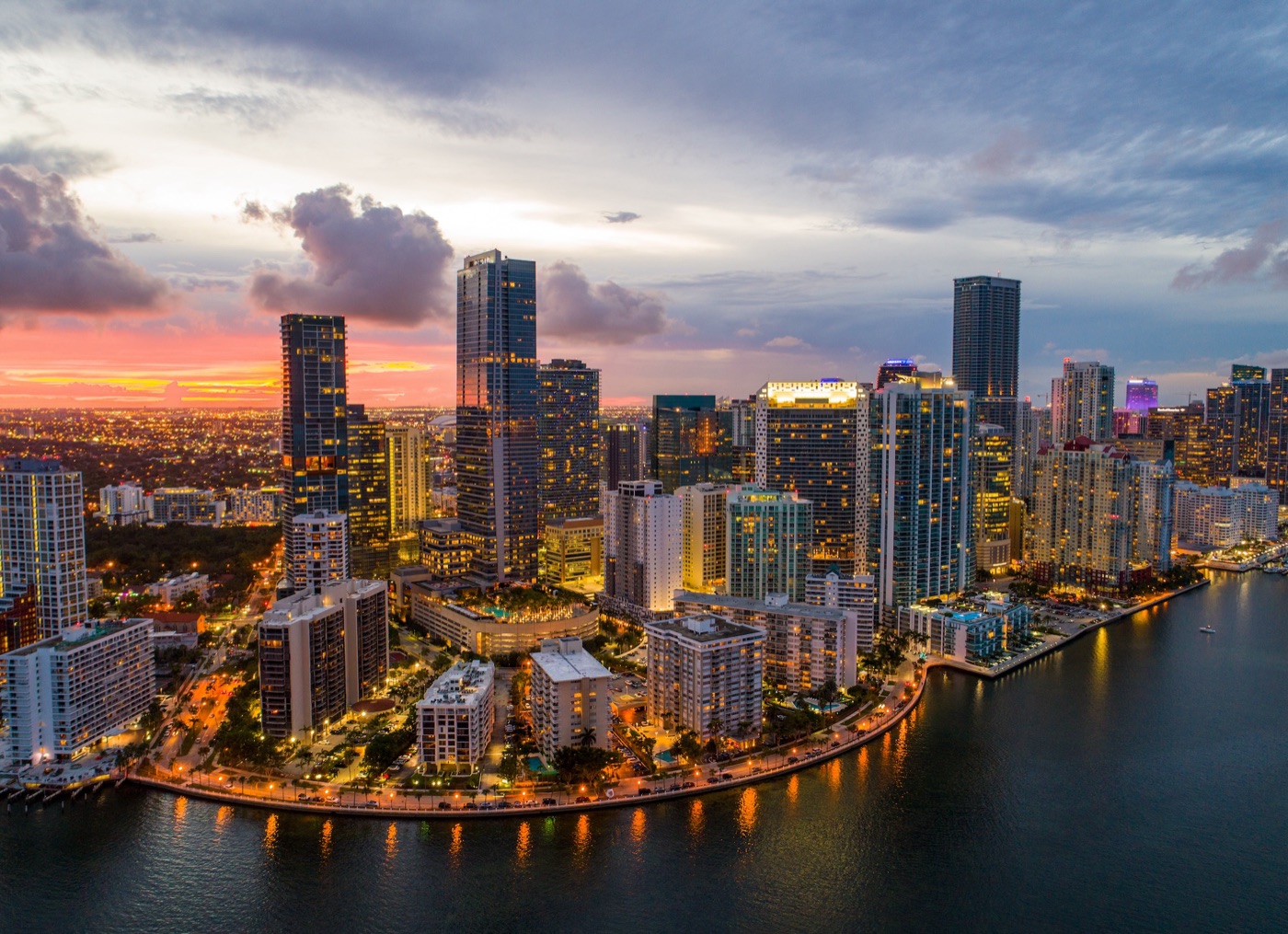
Brickell condos are generally trading between $700 and $1,400 per square foot depending on the building and floor. Luxury towers like St. Regis Brickell, SLS Lux, and Reach at Brickell City Centre sit toward the upper end of that range. Older buildings from the early 2000s in the same neighborhood might come in closer to $550 to $700 per square foot.
Miami Beach, which I treat as its own submarket, ranges widely. Mid-Beach buildings like Faena House and the Edition residences regularly trade above $2,000 per square foot for oceanfront units. South Beach condos in well-maintained buildings on Ocean Drive or Collins Avenue typically range from $800 to $1,600 per square foot. The most affordable pockets of Miami Beach, usually in North Beach near 71st Street, can still be found in the $500 to $750 range.
Coral Gables single-family homes have been consistently ranging from $500 to $900 per square foot for updated homes, with fully renovated or new construction properties on larger lots sometimes exceeding $1,000. Coconut Grove runs similarly, with a slight premium on homes that are walkable to the village or have bayfront exposure. Key Biscayne sits at $700 to $1,200 per square foot for single-family homes and $600 to $1,100 for condos, with the most significant premiums going to direct ocean or bay views.
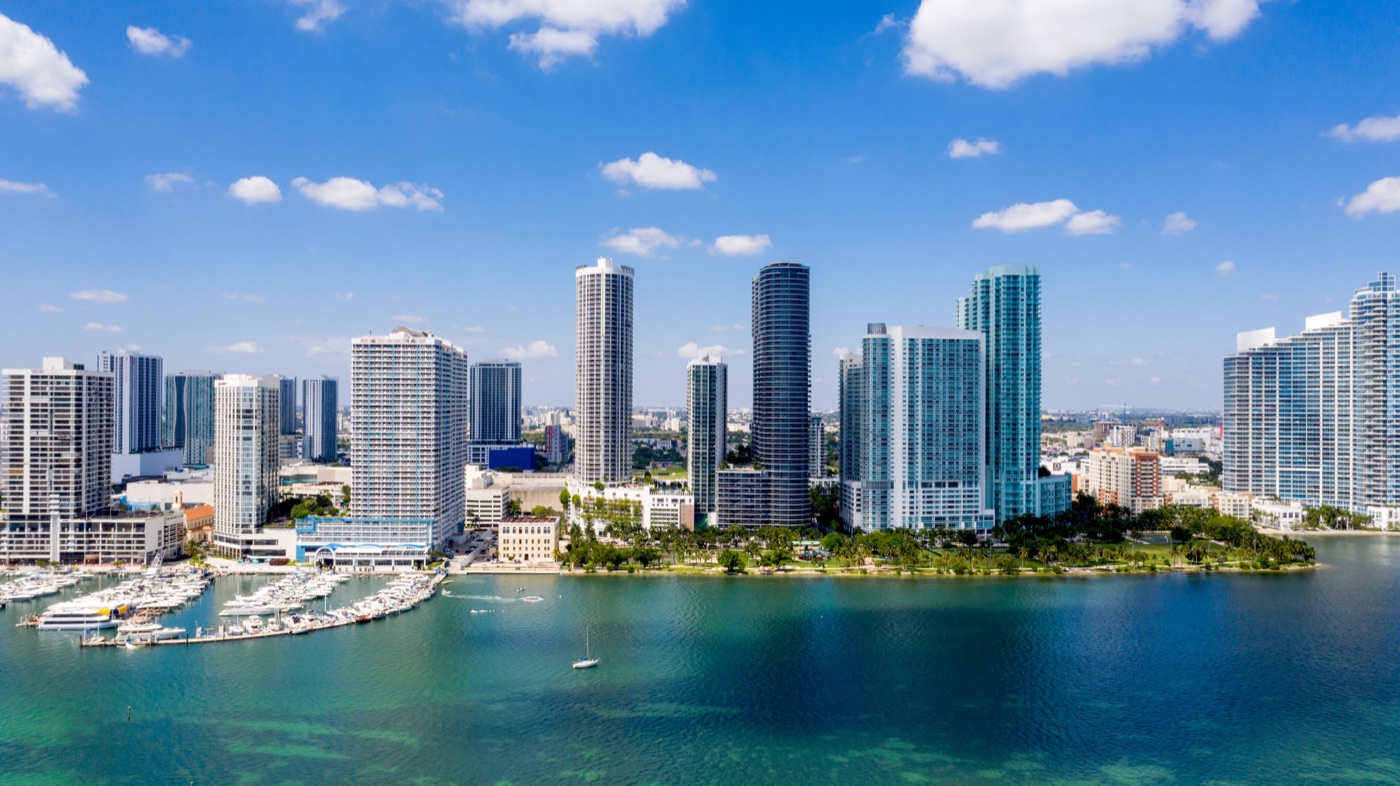
Edgewater has become one of the more interesting stories. Newer towers like Missoni Baia and Elysee are trading at $800 to $1,200 per square foot, while the older building stock in the neighborhood can still be found at $450 to $650. Sunny Isles Beach luxury towers including Porsche Design Tower and Regalia are regularly above $1,500 per square foot, and Bal Harbour residences at the Oceana and St. Regis have traded above $3,000 per square foot for trophy units.
The Variables That Move the Number Most
After years of working across Miami, I have seen a handful of factors that consistently explain the biggest swings in price per square foot. Understanding these variables will help you interpret any number you see in a listing or market report.
Views and floor height are probably the single biggest driver in the condo market. In a building like Brickell Key's Carbonell or Jade Brickell, the difference between a low floor with limited views and a high floor with panoramic bay exposure can be $200 to $300 per square foot within the same building. Always ask what floor and what exposure you are looking at before comparing two prices.
Building age and financial health matter more in Miami than almost any other major market because of the structural recertification requirements that came into law after 2022. A building with fully funded reserves, a clean recertification, and no pending special assessments will always command a higher price per square foot than a comparable building carrying financial or structural uncertainty. I have seen buyers walk away from otherwise attractive prices because the building's reserve study revealed deferred maintenance that could trigger a six-figure special assessment.
Unit size itself affects the per-square-foot price in a counterintuitive way. Smaller units almost always trade at a higher price per square foot than larger units in the same building. A 650 square foot one-bedroom might trade at $900 per square foot while a 2,200 square foot three-bedroom in the same tower trades at $750. The reason is simple: the one-bedroom has a lower absolute price, which brings in more buyers and more competition.
Finally, rental restriction policies affect investor demand significantly. Buildings that allow short-term rentals or have flexible lease minimums attract a wider buyer pool and tend to show slightly higher prices per square foot among comparables. Buildings with 12-month minimum lease requirements or ownership-length waiting periods before rentals are allowed appeal more to end users, which can compress values in a slower season.
How Sellers Should Use This Metric
When I work with sellers, I use price per square foot as a starting point for the conversation, not a conclusion. The first thing I do is pull the sold comparables from the same building over the last six months, then expand to the same neighborhood if the building data is thin. I look at actual closed sales, not list prices, because in some buildings there is a meaningful gap between what sellers ask and what buyers actually pay.
One mistake I see sellers make regularly is cherry-picking the highest per-square-foot sale in their neighborhood and assuming their property should match it. That high sale usually happened for a specific reason: a corner unit with wraparound views, a full renovation with imported stone and custom millwork, a bidding situation with multiple offers. If your unit does not share those characteristics, pricing to that number will stall your listing.
The more reliable approach is to identify the two or three most recent comparable sales that genuinely match your unit in floor level, exposure, finishes, and size range, then adjust from there based on what makes your property better or worse. If you want an honest pricing conversation based on real building data in your neighborhood, call me at (954) 833-0020. I will tell you exactly what the market supports.
How Buyers Should Use This Metric
For buyers, price per square foot is a useful screening tool, but I always caution my clients not to let it override their common sense about value. Here is a framework I walk buyers through when we are evaluating a property.
First, establish the range for the building specifically. Not the neighborhood broadly, but that exact building. Buildings in the same block can have meaningfully different price per square foot histories based on their amenity packages, management quality, and reputation among buyers in the community.
Second, understand what the outliers look like. What is the highest per-square-foot sale in that building in the last year, and why did it trade there? What is the lowest, and what was wrong with it? Once you know the floor and ceiling, you can quickly assess where any given unit sits on that spectrum and whether the asking price is justified.
Third, factor in carrying costs. In Miami, HOA fees can range from $400 per month in a modest older building to $6,000 or more per month in an ultra-luxury tower. A building with $2,500 monthly HOA fees might show a lower price per square foot than one with $800 monthly fees, but your total cost of ownership could be higher. I always run a total monthly cost comparison for my buyers before they fall in love with a number on a listing sheet.
Price Per Square Foot for Single-Family Homes vs. Condos
Comparing condos and single-family homes using price per square foot requires an extra layer of caution. In the condo world, square footage is usually the interior living area only, sometimes measured from interior walls. In single-family homes, the number often includes covered patios, garages, or other non-air-conditioned spaces, which can inflate the square footage and make the price per square foot look lower than it actually is for the livable interior.
When I work with clients comparing a Coral Gables house to a Brickell condo as two investment options, I make sure we are looking at air-conditioned living area only for both properties. I have seen situations where a house appeared to be priced more attractively per square foot until we pulled the actual floor plan and realized a significant portion of that footage was a covered garage and outdoor loggia.
Land value also enters the equation with single-family homes in a way that does not apply to condos. In Pinecrest, a home on a 15,000 square foot lot carries embedded land value that a comparable-sized home on a 7,500 square foot lot does not. That land premium shows up in the total price, which means the price per square foot can appear high even though you are getting real additional asset value in the form of the lot itself.
In my experience, the cleanest apples-to-apples comparisons using price per square foot happen within the same building for condos, or within the same block for single-family homes where lot sizes are fairly consistent. The further you stray from that, the more context you need to interpret the numbers correctly.
Neighborhoods Where Price Per Square Foot Is Trending Up in 2026
Several Miami neighborhoods are showing consistent upward pressure on price per square foot heading into 2026, and I want to highlight a few that I think represent real opportunity rather than hype.
Edgewater continues to close the gap with Brickell as its newer inventory matures and the neighborhood fills in with retail and walkable amenities. Buyers who moved into Missoni Baia or Elysee three or four years ago are sitting on meaningful appreciation, and new towers still under construction are pricing above current resale, which typically pulls the entire neighborhood's averages up over time.
Little River and the upper Wynwood fringe are markets I watch closely. These are not luxury markets yet, but single-family and small multifamily properties have been moving steadily higher as buyers priced out of Wynwood proper push north. In my experience, neighborhoods that border an established high-value area and have a genuine walkable or creative identity tend to appreciate in a reliable pattern.
Fisher Island remains in a category by itself. With fewer than 700 residences on a private island accessible only by ferry or helicopter, supply is structurally constrained. Price per square foot there has been consistently above $2,500 and trending higher for any unit with meaningful water exposure. The buyer pool is global and not particularly sensitive to mortgage rates, which insulates it from the kind of corrections that affect more rate-sensitive segments of the market.
Here is a quick summary of the neighborhoods I am watching most closely for price per square foot movement in 2026:
Neighborhoods showing the strongest upward price per square foot momentum in 2026 include Edgewater new construction towers, which are regularly pricing above $1,000 per square foot on pre-sales. Coconut Grove single-family homes near the village center are seeing renewed interest from domestic buyers relocating from New York and California. Bal Harbour and Surfside are benefiting from continued ultra-luxury demand and very limited new supply. The upper stretch of Biscayne Boulevard from the 50s through the 70s is attracting developer attention and early mover buyers. And Pinecrest, which had been quiet for a couple of years, is seeing inventory shortages push prices higher on any well-maintained home in the top school zones.
Quick reference: neighborhoods with the strongest upward price per square foot momentum heading into 2026:
- Edgewater new construction: regularly pricing above $1,000 per square foot on pre-sales
- Coconut Grove single-family near the village: renewed demand from domestic relocation buyers
- Bal Harbour and Surfside: ultra-luxury demand with structurally limited new supply
- Upper Biscayne Boulevard corridor (50s to 70s): early-mover and developer activity increasing
- Pinecrest top school zones: inventory shortages pushing well-maintained homes higher
- Fisher Island: supply-constrained island market consistently above $2,500 per square foot
Working With a Local Expert to Interpret the Numbers
Price per square foot data is publicly available, and I encourage every buyer and seller to look at it. But the interpretation is where a local agent who works in these specific neighborhoods every day adds real value. I can tell you that a $750 per square foot price in a specific Brickell building is actually above market because that building has a special assessment coming. I can tell you that a $650 per square foot price in a Coconut Grove building looks low until you realize the unit faces a parking garage with no view and no natural light.
I work with buyers and sellers from across the Miami area, including a significant number of Latin American clients who are navigating the market from abroad or are new to South Florida real estate. I understand what matters to someone relocating from Bogota, Caracas, Mexico City, or Buenos Aires, and I can walk through every number, every document, and every decision in both English and Spanish. Hablamos Espanol.
If you are trying to figure out whether a property is priced fairly, whether your home is positioned correctly for the current market, or where the best opportunities are right now given your budget and goals, I am glad to have that conversation. Call me at (954) 833-0020 and let's look at the actual numbers together.
Let's Talk About Miami Market Values
Whether you are buying, selling, or just trying to understand where prices are heading, I am here to help with specific data from the neighborhoods that matter to you. Call Rangely Adames at (954) 833-0020 today.
Related Articles
September 28, 2026 · 10 min read
Argentine Buyers Guide to Miami Real Estate: Process, Financing Themes, and Neighborhood Fit (2026)
Buying Miami real estate from Argentina is workable when you separate what your agent coordinates from what your attorney, CPA, and lender decide. This support guide walks through the process, financing themes, remote closing, and neighborhood fit, then points you to the Argentina foreign-buyer hub for next steps.
Read article →February 2026 · 9 min read
Aventura Real Estate Guide: Condos, Schools & Lifestyle (2026)
Luxury high-rises, top-rated schools, and the Aventura Mall — why families and investors love this North Miami suburb.
Read article →February 2026 · 9 min read
Airbnb Investment Properties in Miami: Rules, ROI & Best Areas
Short-term rental regulations, income projections, and the best Miami neighborhoods for Airbnb investing.
Read article →