Buying a Waterfront Lot in Miami: What You Need to Know (2026)
By Rangely Adames • August 2026 • 11 min read
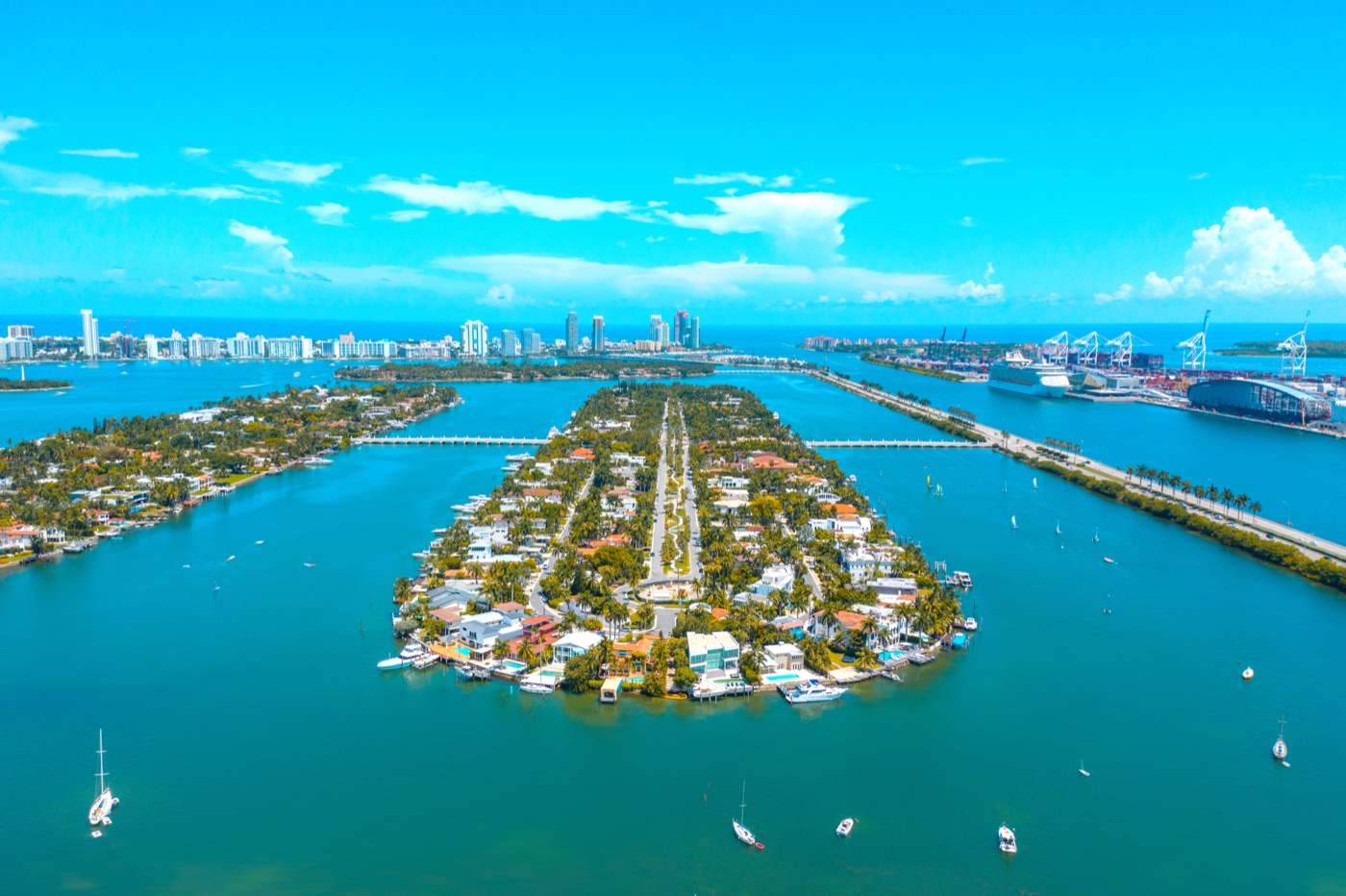
Buying a waterfront lot in Miami is one of the most exciting real estate moves you can make, and also one of the most complicated. I work with buyers at every stage of this process, from the first phone call where someone says they want to build their dream home on the water, all the way through permitting, construction financing, and finally breaking ground. The details matter enormously, and getting them wrong can cost you hundreds of thousands of dollars or years of delays.
Miami has some of the most coveted waterfront land in the country. Whether you are eyeing a canal-front lot in Miami Beach, a bay-front parcel in Coconut Grove, an oceanfront piece in Key Biscayne, or a deep-water lot in the Roads neighborhood, each type of waterfront comes with its own set of rules, costs, and opportunities. The price range is wide. You might find a modest canal lot in North Miami for $800,000 and a bay-front acre in Coral Gables for $8 million or more. Knowing what drives that difference is the first step.
In my experience, the buyers who get the best outcomes are the ones who do serious due diligence before making an offer, not after. This guide covers the key factors I walk every land-buying client through: water type and lot dimensions, seawall condition and replacement costs, zoning and setback rules, flood zone designations, utilities, and how to compare neighborhoods by price per linear foot of water frontage. If you are working with a Latin American buyer or investor who needs everything explained in Spanish, my team Hablamos Espanol and we are happy to walk through every detail together.
Ready to Find Your Waterfront Lot in Miami?
I work with buyers across Miami-Dade to identify waterfront lots with real build potential. Hablamos Espanol. Call (954) 833-0020 to get started.
Call (954) 833-0020Types of Waterfront in Miami and What They Mean for Your Build
Not all waterfront is equal in Miami, and the type of water your lot touches will shape everything from your dock options to your insurance premiums. The main categories you will encounter are oceanfront, bay front, canal front, river front, and lake front. Each has a different character and a very different price tag.
Oceanfront lots are extremely rare as standalone parcels because most oceanfront land in Miami Beach, Bal Harbour, and Sunny Isles has already been built on. When one does come to market, it can command $5,000 to $15,000 per square foot of lot area depending on the location and the buildable area. Buying oceanfront land today almost always means tearing down an existing structure, which adds demolition costs of $100,000 to $300,000 or more to your budget.
Bay-front parcels along Biscayne Bay, including areas in Coconut Grove, Coral Gables, Miami Shores, and the Roads neighborhood, are the most prestigious category for custom home buyers. These lots offer wide open views, deep water for large boat dockage, and access to Government Cut and the Atlantic. Bay-front lots in Coral Gables and Coconut Grove typically start around $3 million and can exceed $12 million for premium acreage with unobstructed views.
Canal-front lots make up the largest share of available waterfront land in Miami. Neighborhoods like Miami Beach, North Bay Village, Aventura, and sections of Brickell Key have extensive canal systems. Canal lots are more affordable, often ranging from $800,000 to $3 million depending on canal width, water depth, and whether the lot has direct bay access or is interior. For boat owners, canal depth is critical. A canal with less than 4 feet of depth at low tide will limit you to smaller vessels.
River-front lots along the Miami River are an emerging category. As the city has invested in riverwalk improvements and mixed-use development, single-family lots with river frontage have attracted more interest from custom home buyers. Prices here typically run $1.5 million to $4 million depending on lot size and proximity to the river mouth.
Explore on rangelyadames.com
Seawalls: The Single Biggest Hidden Cost
If there is one thing I tell every buyer before they fall in love with a waterfront lot, it is this: get the seawall inspected before you make an offer, not after. A failing seawall can add $200,000 to $600,000 to your project cost before you have poured a single yard of concrete for your house.
Miami seawalls are typically made of concrete, steel sheet pile, or a combination of both. Most seawalls in established neighborhoods like Miami Beach, Coconut Grove, and the Roads were installed in the 1960s through 1980s, which means they are 40 to 60 years old. The Miami-Dade County building code requires seawalls to be a minimum of 18 inches above mean high water, and sea level rise has pushed many older seawalls out of compliance.
Replacement costs depend on the linear footage of seawall, the material chosen, and the permitting complexity. In 2025 and 2026, I am seeing replacement quotes running $1,500 to $3,500 per linear foot of seawall. A 100-foot lot with a failing seawall could mean $150,000 to $350,000 in seawall work alone, and that is before any permits for your new home.
When reviewing a lot, I always recommend hiring a marine contractor to walk the seawall during an inspection. Look for horizontal cracks, spalling concrete, rust staining from exposed rebar, and any signs of soil erosion behind the wall. A good inspector will probe the soil behind the seawall to check for voids, which indicate water is already passing through.
The permitting process for seawall replacement in Miami-Dade County runs through both the county's Regulatory and Economic Resources department and, in many cases, the Army Corps of Engineers if the work affects navigable waters. Budget 6 to 18 months for permitting and construction if a full replacement is needed.
Zoning, Setbacks, and Buildable Area
Buying a waterfront lot is only the beginning. What matters for your project is how much of that lot you can actually build on. This is where zoning and setback rules become critical, and where I see buyers get frustrated after the fact when they realize their intended house footprint does not fit the lot.
Miami-Dade County and individual municipalities each have their own zoning codes. A lot in Coral Gables is governed by Coral Gables city code. A lot in unincorporated Miami-Dade is governed by county code. Miami Beach has its own set of regulations, including historic preservation overlays in many neighborhoods. Before making any offer, I request a zoning verification letter from the relevant municipality so we know exactly what is permitted.
Waterfront lots are subject to setbacks from the seawall or mean high water line. These typically run 25 to 50 feet depending on the municipality and zoning district, meaning your house must sit that far back from the water. You also have front setbacks from the street, side setbacks from the neighbors, and in many cases, lot coverage maximums that limit what percentage of the lot can be covered by structures and impervious surfaces.
Floor Area Ratio, commonly called FAR, is another key number. FAR defines the maximum total floor area allowed relative to lot area. A 10,000 square foot lot with a FAR of 0.5 allows 5,000 square feet of total floor area. If you are planning a 7,000 square foot house, you need to confirm the FAR supports that before you buy.
I always run a preliminary feasibility analysis on any lot a client is seriously considering. This involves pulling the zoning code, calculating the buildable envelope, and confirming whether the buyer's intended program, meaning the size and style of house they want to build, is achievable on that particular lot.
Flood Zones and Insurance: What Every Buyer Must Understand
Virtually every waterfront lot in Miami sits in a Special Flood Hazard Area, which FEMA designates as Zone AE or Zone VE. Zone VE is the most restrictive and applies to coastal areas subject to wave action. Zone AE applies to areas with high flood risk but without significant wave action. Both zones require flood insurance if you have a federally backed mortgage, and both significantly affect how your home must be designed and built.
The key number in flood zone construction is the Base Flood Elevation, or BFE. Your finished floor must be at or above the BFE. Many municipalities, including Miami Beach and Coconut Grove, require finished floors to be 1 to 2 feet above BFE as additional freeboard. This can mean significant fill or structural elevation costs before construction even begins.
Flood insurance costs for a new luxury waterfront home in Miami can run $15,000 to $50,000 per year or more depending on the value of the structure, the elevation of the finished floor relative to BFE, and the specific flood zone. The National Flood Insurance Program has caps on coverage at $500,000 for the structure and $100,000 for contents, so most luxury homeowners need private flood insurance on top of that, which adds cost.
Some buyers are surprised to learn that flood insurance is not the same as wind insurance. In Miami, you typically need separate policies for flood, wind, and general homeowners insurance. I always recommend buyers get insurance estimates from a South Florida broker before closing on any waterfront lot, because the combined annual insurance cost can run $40,000 to $120,000 per year on a high-value waterfront home.
Utilities, Permitting, and Infrastructure Costs
One of the most overlooked cost categories for land buyers is getting utilities to the lot. In established neighborhoods like Coral Gables, Coconut Grove, and Miami Beach, the lot likely already has water, sewer, and electrical connections at the property line. In less developed areas or on larger acreage parcels, you may need to pay for utility extensions, which can run $50,000 to $200,000 or more depending on the distance from existing infrastructure.
Miami-Dade Water and Sewer is the primary utility provider for most of the county. In some cities, like Coral Gables, the city operates its own water utility. Connection fees, impact fees, and inspection fees add up quickly. I typically budget $30,000 to $75,000 in utility and impact fees for a new custom home build in Miami-Dade, though this varies by municipality and house size.
Permitting for a new custom home in Miami is a multi-step process that involves the building department, zoning review, environmental review if the lot is near mangroves or wetlands, and sometimes the South Florida Water Management District. In my experience, permitting a custom home on a waterfront lot in Miami takes 12 to 24 months depending on the complexity of the design and the backlog at the relevant municipality's building department.
If the lot has any specimen trees, meaning native trees above a certain trunk diameter, those trees are protected under Miami-Dade's tree ordinance. Removing or relocating them requires a separate permit and may require mitigation in the form of replacement planting or a payment into a tree trust fund. This is another item I check during due diligence on every land transaction.
Neighborhood Comparison: Price Per Linear Foot of Waterfront
When comparing waterfront lots across different Miami neighborhoods, I find that price per linear foot of water frontage is the most useful metric. It normalizes differences in lot size and lets you see where you are getting the most water for your dollar.
Here is a general range of what I am seeing in 2026 across key neighborhoods. Keep in mind these are ranges, and individual lots can vary significantly based on canal width, water depth, views, and lot depth from the street.
Coral Gables bay front lots are among the most expensive anywhere in Miami at $20,000 to $60,000 per linear foot of bay frontage. These lots command a premium because of the wide bay views, deep water, proximity to top-rated schools, and the city's strict architectural standards that protect long-term values. Coconut Grove bay-front lots run similarly, at $15,000 to $50,000 per linear foot.
Miami Beach canal lots, particularly in the Sunset Islands, Venetian Islands, and La Gorce neighborhoods, typically run $8,000 to $25,000 per linear foot. The variation depends heavily on whether the canal has direct bay access and the width and depth of the waterway. Lots on wider canals closer to the bay command significantly more than interior lots on narrow canals.
North Bay Village and Aventura canal-front lots are more accessible, ranging from $4,000 to $10,000 per linear foot. These neighborhoods attract buyers who want waterfront living at a lower entry point, and they have become increasingly popular with buyers relocating from New York and California who want boat access without the Coral Gables or Miami Beach price tags.
Key due diligence items I walk every waterfront lot buyer through before making an offer:
- Obtain a seawall inspection from a licensed marine contractor, not a general home inspector
- Pull the FEMA flood map and confirm the specific flood zone and Base Flood Elevation for the lot
- Request a zoning verification letter from the municipality to confirm permitted uses, FAR, and setbacks
- Confirm water, sewer, and electrical service is available at the property line or get bids for utility extensions
- Check for any easements, including utility easements, public access easements, or conservation easements, that could limit construction
- Verify canal depth with a depth sounder at low tide if boating is important to your plans
- Review any deed restrictions or neighborhood association rules that affect architectural design or construction timelines
- Get preliminary insurance estimates from a South Florida broker covering flood, wind, and homeowners policies
Financing a Waterfront Lot Purchase
Land loans are significantly different from mortgage loans, and many buyers are surprised to find that their usual lender does not offer them at all. Most conventional lenders will not finance raw land, particularly waterfront land that does not yet have a home on it. The options for financing a lot purchase typically include portfolio lenders, private banks, hard money lenders, and seller financing.
Private banks that cater to high-net-worth clients, including several with Miami offices such as City National Bank, Ocean Bank, and the private banking arms of larger institutions, do offer lot loans. These typically require 30 to 40 percent down, carry higher interest rates than traditional mortgages, and have shorter terms, often 3 to 5 years rather than 30. The expectation is that the borrower will refinance into a construction loan once permits are obtained.
Construction-to-permanent loans are the most efficient financing structure for buyers who plan to build right away. These loans cover both the lot purchase and the construction cost in a single loan that converts to a permanent mortgage once the home is complete. Down payments typically run 20 to 30 percent of the total project cost, which includes land and construction.
For Latin American buyers making a cash purchase of a waterfront lot, the process is more straightforward but still requires thorough documentation of the source of funds to comply with federal anti-money-laundering regulations. I work with attorneys and title companies experienced in international transactions to make this process as smooth as possible. My team Hablamos Espanol and we can coordinate with Spanish-speaking legal and financial professionals throughout the process. If you have questions about structuring your purchase, call me directly at (954) 833-0020.
Working With an Agent Who Knows Waterfront Land
Buying a waterfront lot is not like buying a condo or even a single-family home. The due diligence is more complex, the costs are harder to estimate, and the number of professionals involved is larger. You need a real estate agent who regularly works with waterfront land and who has relationships with the marine contractors, environmental consultants, architects, and permitting specialists who can help you evaluate a lot accurately.
I have helped buyers navigate lot purchases in Coconut Grove, Coral Gables, Miami Beach, Key Biscayne, and North Miami Beach, and each transaction has had its own set of unique complications. A lot in the South Coconut Grove Estates area might have mangrove buffers that limit construction. A lot in the Venetian Islands might have historic district rules that affect your architectural choices. A canal lot in Aventura might have a homeowners association that limits dock size and boat type. These are the kinds of details that only come out when you know what to look for.
If you are considering buying a waterfront lot in Miami, I would love to talk through what you are envisioning and help you figure out whether the parcels you are looking at can actually support your plans. My approach is direct: I will tell you what the real costs and risks are before you fall in love with a lot that does not work for your goals. Call me at (954) 833-0020 and we can set up a time to walk through your options together.
Let's Talk About Your Waterfront Land Search
Whether you are just starting to explore options or you have a specific lot in mind, I can help you understand exactly what you are buying and what it will take to build. Call Rangely Adames at (954) 833-0020 for a straightforward conversation about your Miami waterfront goals.
Related Articles
September 28, 2026 · 10 min read
Argentine Buyers Guide to Miami Real Estate: Process, Financing Themes, and Neighborhood Fit (2026)
Buying Miami real estate from Argentina is workable when you separate what your agent coordinates from what your attorney, CPA, and lender decide. This support guide walks through the process, financing themes, remote closing, and neighborhood fit, then points you to the Argentina foreign-buyer hub for next steps.
Read article →February 2026 · 9 min read
Aventura Real Estate Guide: Condos, Schools & Lifestyle (2026)
Luxury high-rises, top-rated schools, and the Aventura Mall — why families and investors love this North Miami suburb.
Read article →February 2026 · 9 min read
Airbnb Investment Properties in Miami: Rules, ROI & Best Areas
Short-term rental regulations, income projections, and the best Miami neighborhoods for Airbnb investing.
Read article →